Do you need a permit for a fire pit in Los Angeles?
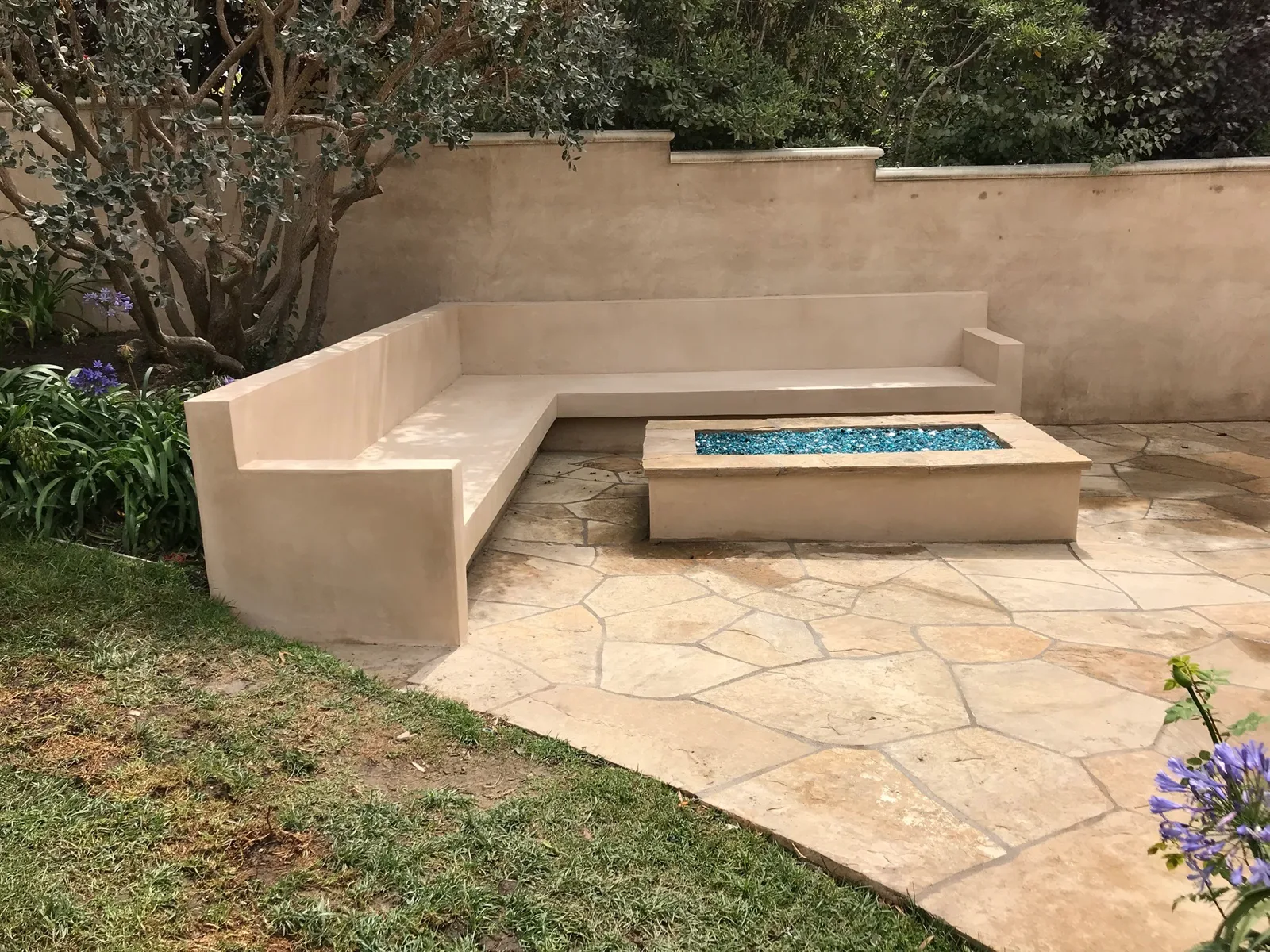
In the City of Los Angeles, the answer turns on the fuel and the build. A gas fire pit needs a plumbing permit for its gas line. A masonry outdoor fireplace is a new structure, so it goes through a building permit.
A wood fire pit needs no plumbing permit. Its limits come from South Coast AQMD Rule 445 and the Fire Code. They decide if a new one can be built, when it burns and where it sits.
Which fire pits and fireplaces need a permit in Los Angeles?
In Los Angeles, a fire pit permit usually means a plumbing permit for the gas line. Our page on built-in gas and wood fire pits covers the build, and this table covers the rules.
| Feature | Permit in the City of Los Angeles | Other rules that apply |
|---|---|---|
| Gas fire pit, built in | Plumbing permit for the gas line | Gas only under Rule 445; the fire chief approves a spot within 10 feet of a building |
| Wood fire pit, built in | No plumbing permit | New ones only under a Rule 445 exemption; no-burn days; the 10-foot approval rule |
| Portable fire pit or chiminea | None for the unit | No-burn days; 15 feet from structures, except at one- and two-family dwellings |
| Masonry outdoor fireplace | Building permit, plus a plumbing permit for gas | Rule 445 device types; the 10-foot approval rule |
| BBQ island with a gas line | Plumbing permit for the gas line | No wood-fired grilling on no-burn days; the 10-foot approval rule |
Do you need a permit for a gas fire pit?
Yes, when a gas line feeds it: LADBS requires a plumbing permit for the installation of any gas piping. The one exception is piping under 6 feet from an existing gas outlet to an appliance in the same room. A licensed plumbing contractor runs the line under that permit. The same rule covers BBQ islands on the same gas line.
Rule 445 reaches gas too. A new built-in gas pit has to be what the rule calls a dedicated gaseous-fueled fireplace. That means gas only, with the burner pan fixed to the masonry or metal base.
Can you build a wood-burning fire pit in your backyard?
Usually not a new built-in one. Rule 445, last amended September 5, 2025, counts it as a wood-burning device. That term covers any open or enclosed, permanently installed, outdoor device burning wood for looks. Permanently installed means attached to the ground, floor or wall and not readily moveable.
In new development, meaning construction begun on or after March 9, 2009, no wood-burning device may be permanently installed. At any home, a new permanent device must be one of four types. They are an EPA certified wood-burning heater, a pellet-fueled heater, a masonry heater and a dedicated gas fireplace.
An open fire pit is none of the four. AQMD’s guidance says the masonry heater is not an open-hearth wood-burning fireplace. So a new open wood pit needs one of two exemptions.
One covers a home damaged or destroyed in a natural disaster declared a State of Emergency. There, a new wood-burning device can replace the one it had. On January 7, 2025, the Governor proclaimed one in Los Angeles and Ventura Counties for the Palisades Fire. The other exempts registered historical sites and contributing structures in a Historic Preservation Overlay Zone from the four-type limit.
An existing wood pit can keep burning outside no-burn days, since AQMD says wood burning is not banned. A fire bowl or chiminea is not permanently installed, so the install limits skip it.
Does an outdoor fireplace need a permit?
Yes. LADBS approves building plans before it issues a permit for a new building or structure. A masonry fireplace with a footing and a chimney is one.
Outside those exemptions, Rule 445 bars a new open wood fireplace. A gas one must be dedicated gas. New indoor fireplaces follow the same four types. Refacing a fireplace inside the house has its own page.
Can you use a fire pit on a no-burn day?
Not a wood one. From November 1 through the end of February, South Coast AQMD declares no-burn days when poor air quality is forecast. On those days Rule 445 bars burning in any indoor or outdoor wood-burning device. A few homes are exempt, such as one where wood is the sole source of heat.
The ban also covers portable outdoor wood-burning devices, which include fireplaces, burn bowls and chimineas on residential property. Wood-fired ovens and grills are covered too, but AQMD says a charcoal grill used for cooking is allowed. Gas devices are their own category in the rule, and the no-burn rule names only wood devices.
Check before you light a wood fire. AQMD’s no-burn alert map looks up your address or ZIP code, and its Air Alerts come by email.
How far does a fire pit have to be from the house?
Under the 2025 California Fire Code, Section 307.4.2 keeps a recreational fire 25 feet from a structure or combustible material. Anything that could carry the fire to within 25 feet of a structure has to be cleared before lighting.
The code’s recreational fire is an outdoor fire for pleasure, cooking or warmth. Its fuel area is 3 feet across or less and 2 feet high or less. Fuel in an outdoor fireplace, a portable outdoor fireplace or a barbecue grill or pit falls outside it.
Section 307.4.3 covers portable outdoor fireplaces, the steel, clay or concrete units that burn solid fuel. They stay 15 feet from a structure or combustible material, except at one- and two-family dwellings. Under Section 307.5, each of these fires is attended until it is out, with an extinguisher or garden hose ready.
The City of Los Angeles Fire Code adopts Section 307 and adds its own rules. One covers permanent burning devices built as separate structures for cooking, decoration or entertainment. Within 10 feet of a building, the fire chief must approve the location. The City code also bans burning trash or other unwanted material in an outdoor fireplace or barbecue.
Glendale, Pasadena and Burbank are separate cities, outside the City code. Glendale, for one, runs its own fire department, and each fire department can add its own conditions.
What if your lot is in a high fire hazard zone?
If it is a Very High Fire Hazard Severity Zone in the City, LAFD brush clearance rules apply. Hazardous vegetation within 200 feet of structures stays cut back year round. On March 24, 2025, CAL FIRE issued new recommended hazard zone maps for the City. State law requires the City to adopt them by ordinance.
A fire pit in the zone gets planned around that clearance. A flagstone floor around the fire pit keeps mulch and dry grass back from the rim.
How the permit question fits into your fire pit job
We settle the permit path at the first site visit, before any price. We note the fuel, the distance to the house and fences, and where gas can come from. If the job adds a patio, read when the patio under the pit needs a permit.
Where a permit applies, it is handled as part of the job. The paperwork is filed for you where the agency allows it. The permit path and the fire rules for your address go into your free written quote.