Brick Masonry
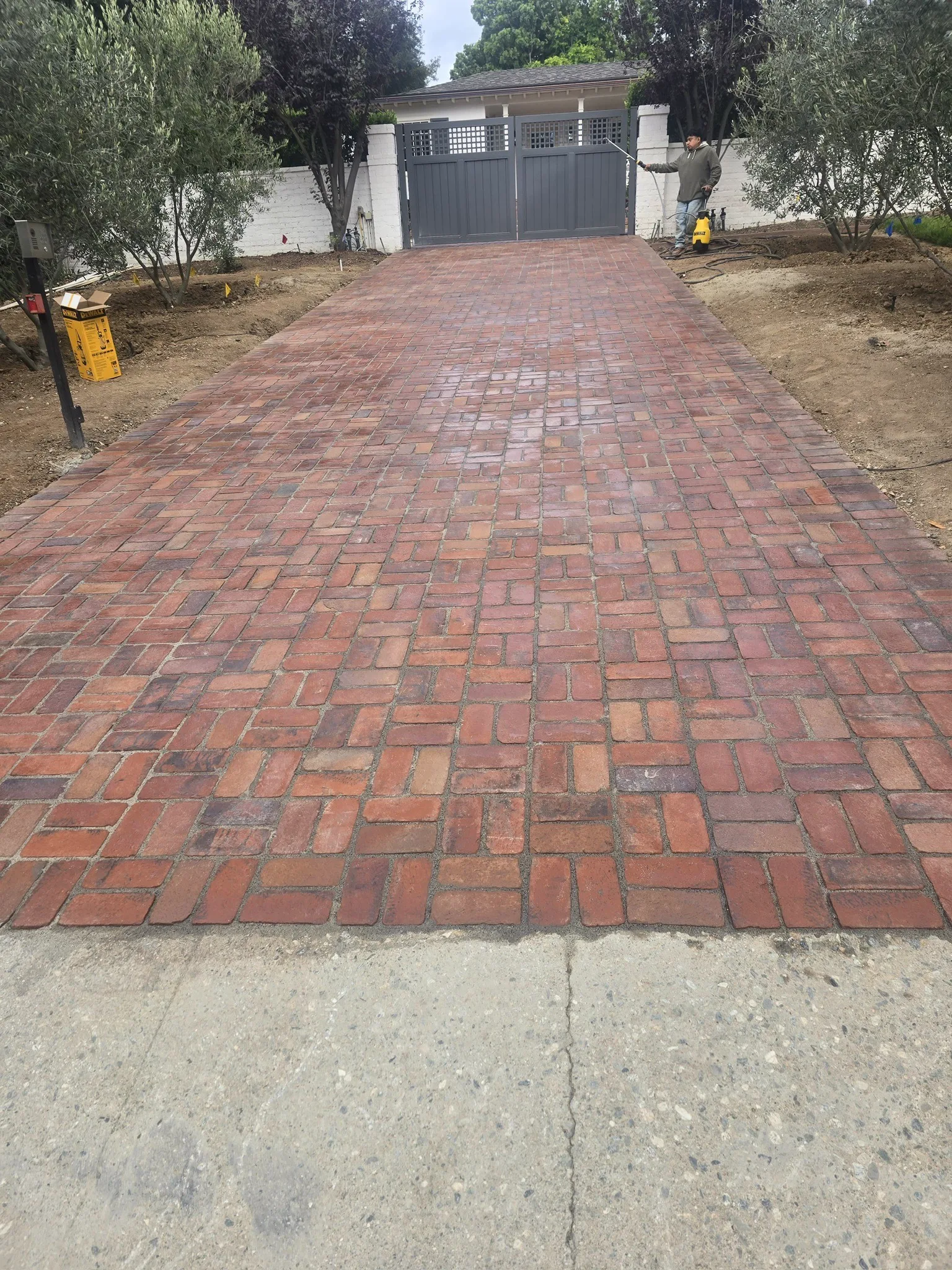
Brick walls, steps, walkways, planters and full brick driveways — plus brick veneer over existing walls. Classic material, clean coursing.
Learn More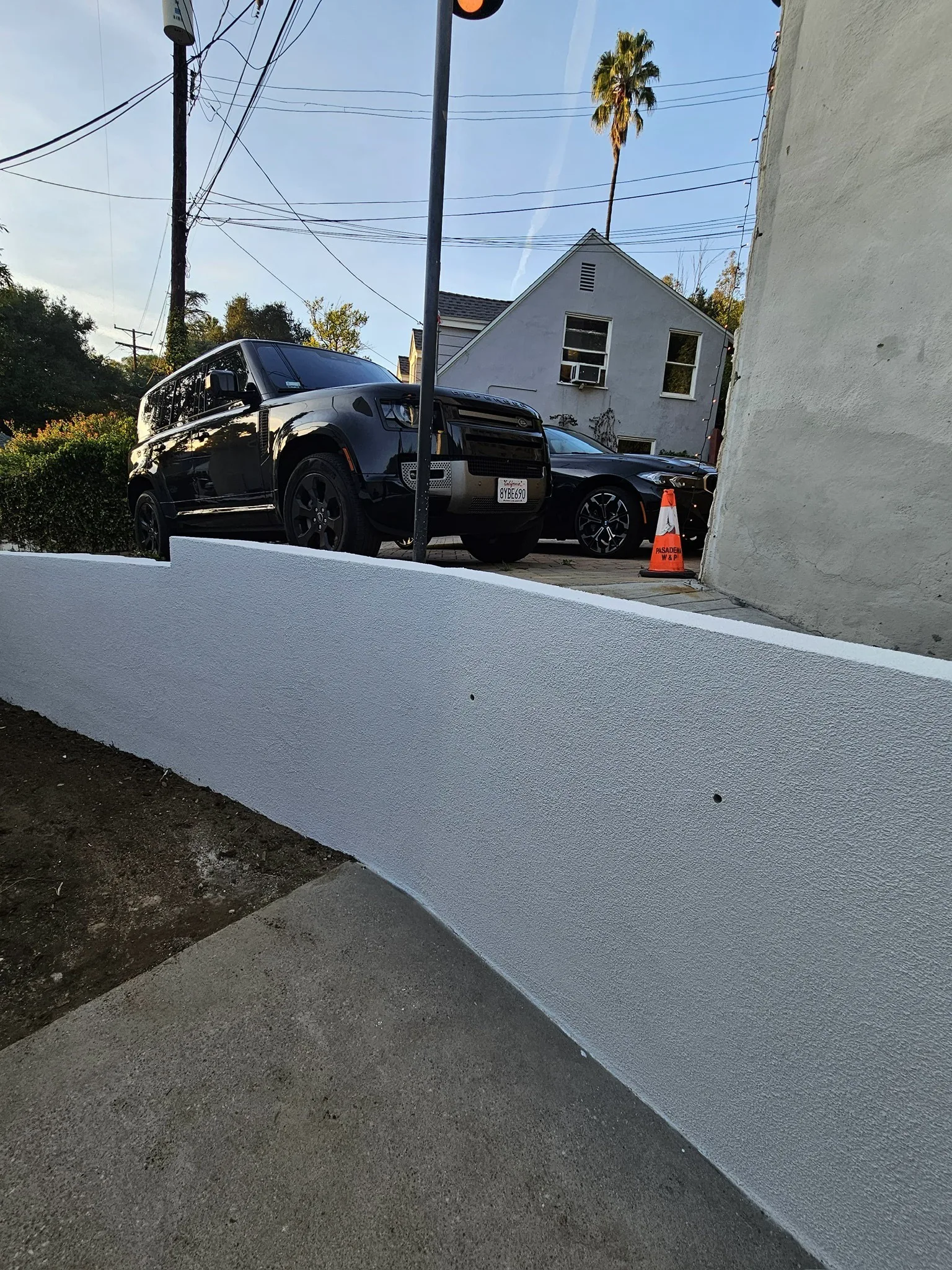
Retaining wall repair in Los Angeles starts with one question: is the wall failing, or is it finished? Around Glendale, Burbank, Pasadena and across the Los Angeles area, a lean, a bulge or a stair-step crack sends most contractors straight to a demolition quote. We read the wall first. A wall with a sound core and a drainage problem can be reinforced, drained and refinished for a fraction of a rebuild, and a wall with a failed footing needs to come down before the next wet season decides for you.
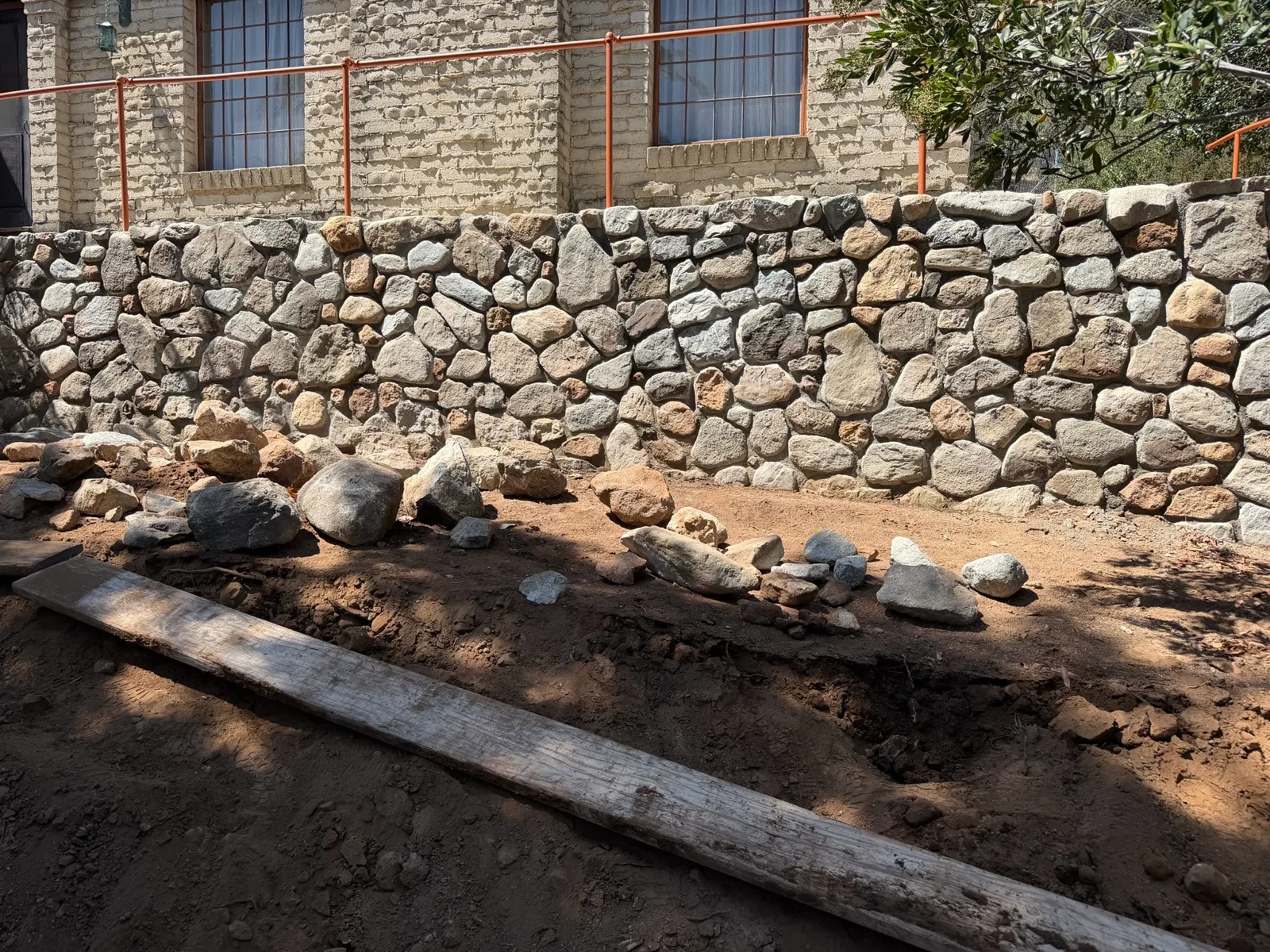
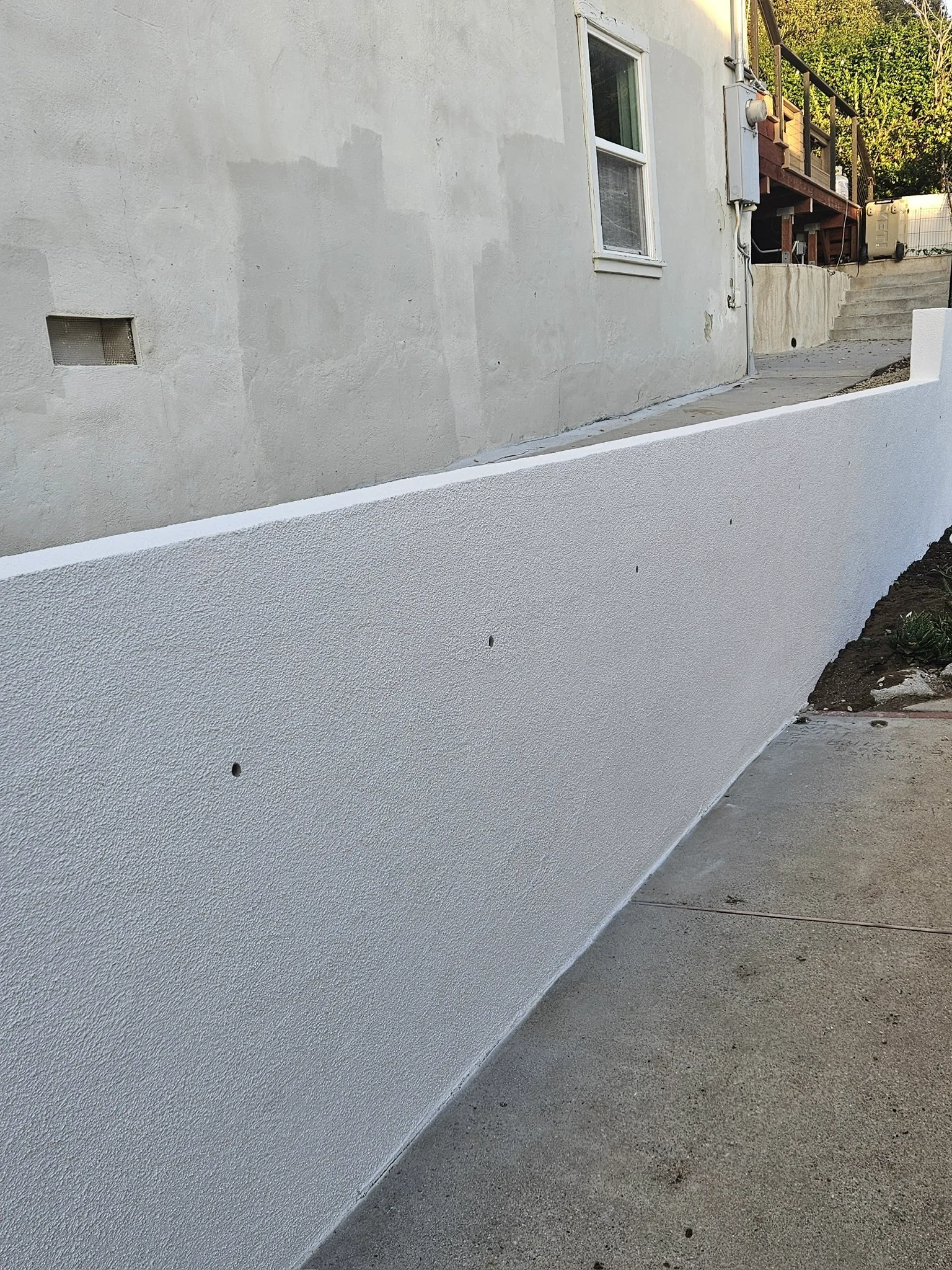
Both answers are in our work. One property wall came to us in bad shape; we reinforced it and finished it in a fresh, water-resistant stucco coat, and it reads as a new wall today. A historic river rock wall that had failed went back up with roughly 95 percent of its original stone. Customers have hired us to save walls other companies said had to be demolished, and when the wall really is past saving, our new retaining wall construction replaces it with real drainage built in.
Tell us about your project — we’ll get right back to you.
Almost every failed retaining wall in LA died the same way: water. Soil that cannot drain gets heavier every storm and pushes harder, and a wall built without gravel backfill, drain pipe and weep holes takes that push until it moves. The signs come in order. Damp patches and white efflorescence first, then hairline cracks, then stair-step cracks walking through the block joints, then the lean or the mid-wall bulge you can sight down from the end.
We read those signs before anyone talks about price. A wall that is leaning a little, holding a garden bed, with a footing that has not moved, is usually a drainage and reinforcement job. A wall that has rotated several inches, holds a driveway or a slope, or shows daylight through the joints has lost its structure, and the only fix is a rebuild. You get the read in plain words at the site visit, with photos of what we found.
The repair version of the job attacks the cause first. We open the ground behind the wall where we can, add the gravel backfill and drain pipe the original never had, and cut weep holes so water leaves through the face instead of pushing on it. Then the wall itself gets strengthened: cracked sections cut out and relaid, the core grouted or thickened, steel and anchors added where the engineering calls for them.
Refinishing is where the repair disappears. Most LA retaining walls wear a stucco coat, so a reinforced wall gets a fresh stucco recoat matched to the house, and stone or brick faces get rebuilt with material blended to the old. On river rock and older stone walls, that means river rock restoration with the original rock reset in matching mortar, the way the foothill neighborhoods from Glendale to Altadena were built in the first place.
Some walls are past saving, and saying so early is the kindest thing we can do. Shallow or missing footings, no drainage anywhere along the run, a lean across most of the length, or wide structural cracks all point the same direction. Published cost guides use a simple rule: when the repair estimate passes about half the cost of a new wall, replace it. Trying to pull a badly rotated wall back to plumb usually costs more than building it again.
A rebuild from the footing goes in as a proper structure: engineered where height or load requires it, reinforced and grouted block or poured concrete, backfill that drains, and the finish you choose. Walls over 4 feet measured from the bottom of the footing, walls holding a driveway, pool or slope, and every wall in a designated LA hillside area need a permit, and we handle that path. Our retaining wall permit guide covers the triggers, and the hillside wall guide covers what slope lots need. Glendale's canyons keep us busiest; our Glendale retaining wall page covers that ground.
Free, no-obligation estimates across Glendale, Burbank and Greater Los Angeles.
(424) 653-0453From the first look at the site to the final walk-through, here is exactly how it goes.
We look at the project where it lives: the grade, the access, what is being held back or built on, and what you want the finished space to look like.
You get a written quote with a real timeline. It spells out materials, finishes, demolition and haul-off, and flags permit or engineering questions before anything is built.
Proper base and footings, clean courses, real drainage behind every wall. The details you cannot see are the reason the work lasts, and we treat them that way.
We walk the finished work together — joints, finishes, cleanup, the whole job. Done means you have looked at every part of it and said so.
Common questions about retaining wall repair across Glendale, Burbank and Greater Los Angeles. Don't see yours? Give us a call — we're happy to help.
Brick walls, steps, walkways, planters and full brick driveways — plus brick veneer over existing walls. Classic material, clean coursing.
Learn More Natural stone walls, river rock work, flagstone patios and paths, and stone veneer on walls, columns and outdoor kitchens.
Learn More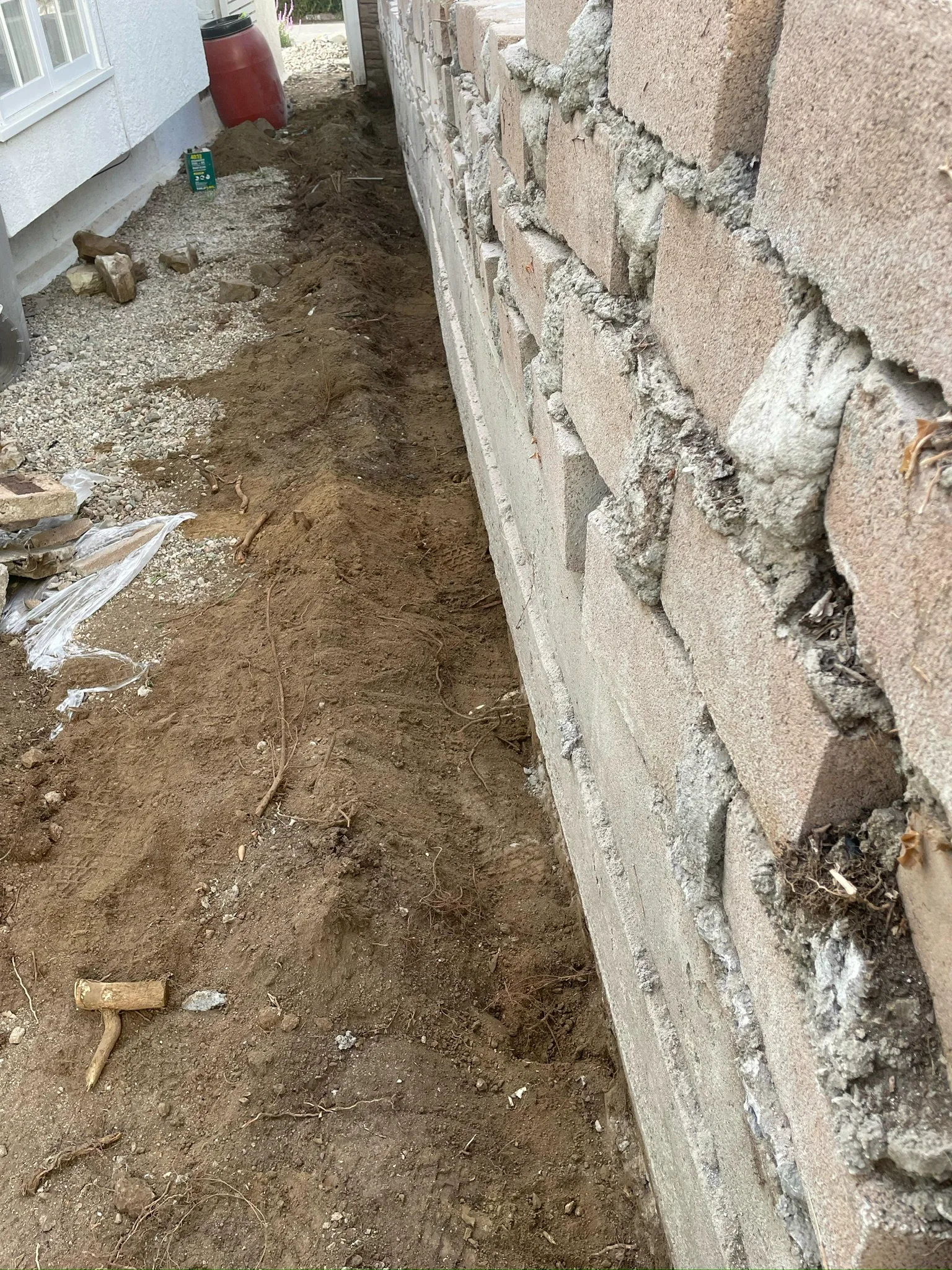
Engineered block and concrete retaining walls with real drainage — stucco, stone or brick finished — plus failing walls rebuilt right.
Learn More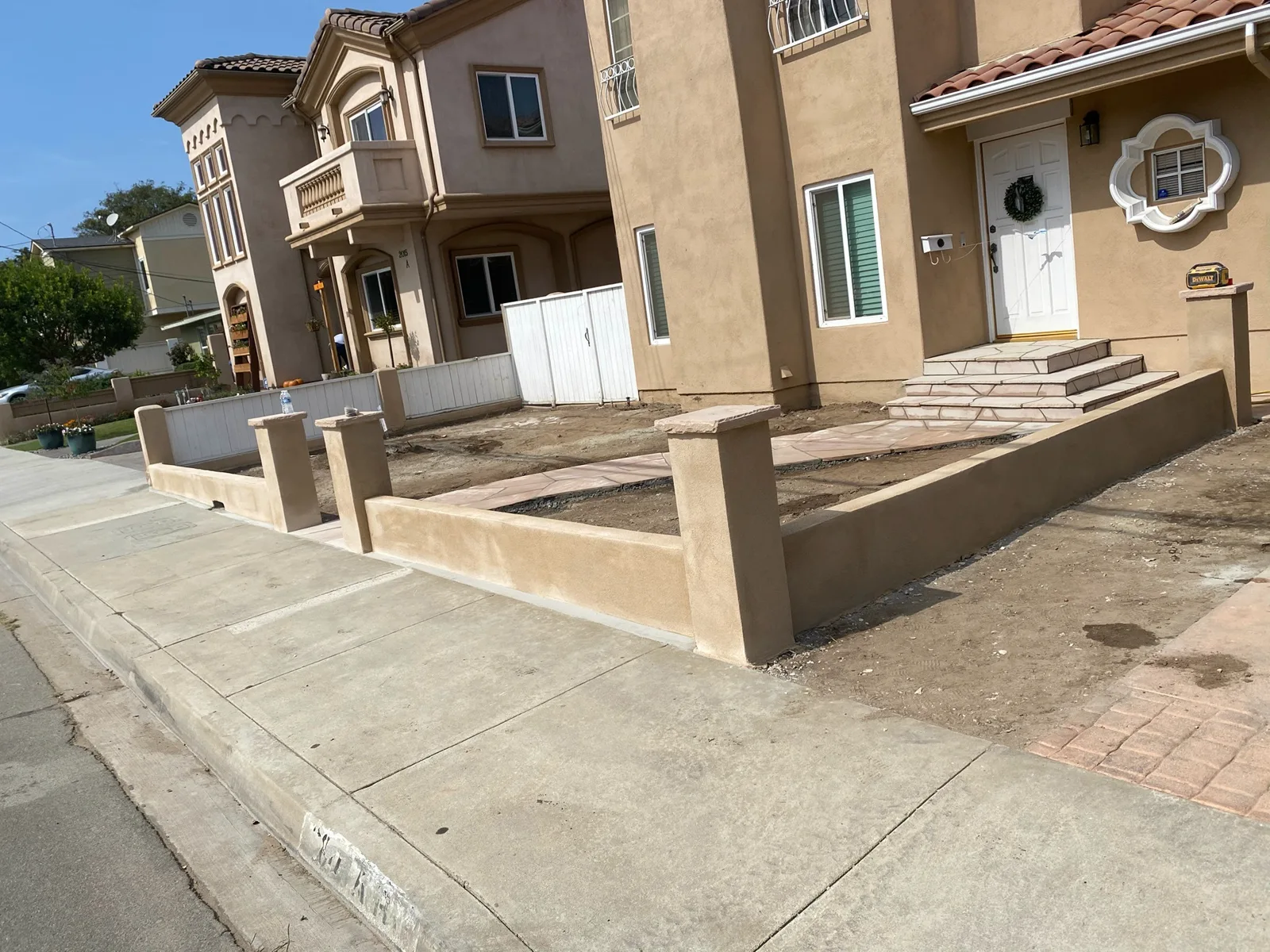
Property line walls, privacy walls, courtyard walls and gated front-yard enclosures — reinforced block, finished in stucco, stone or left clean.
Learn More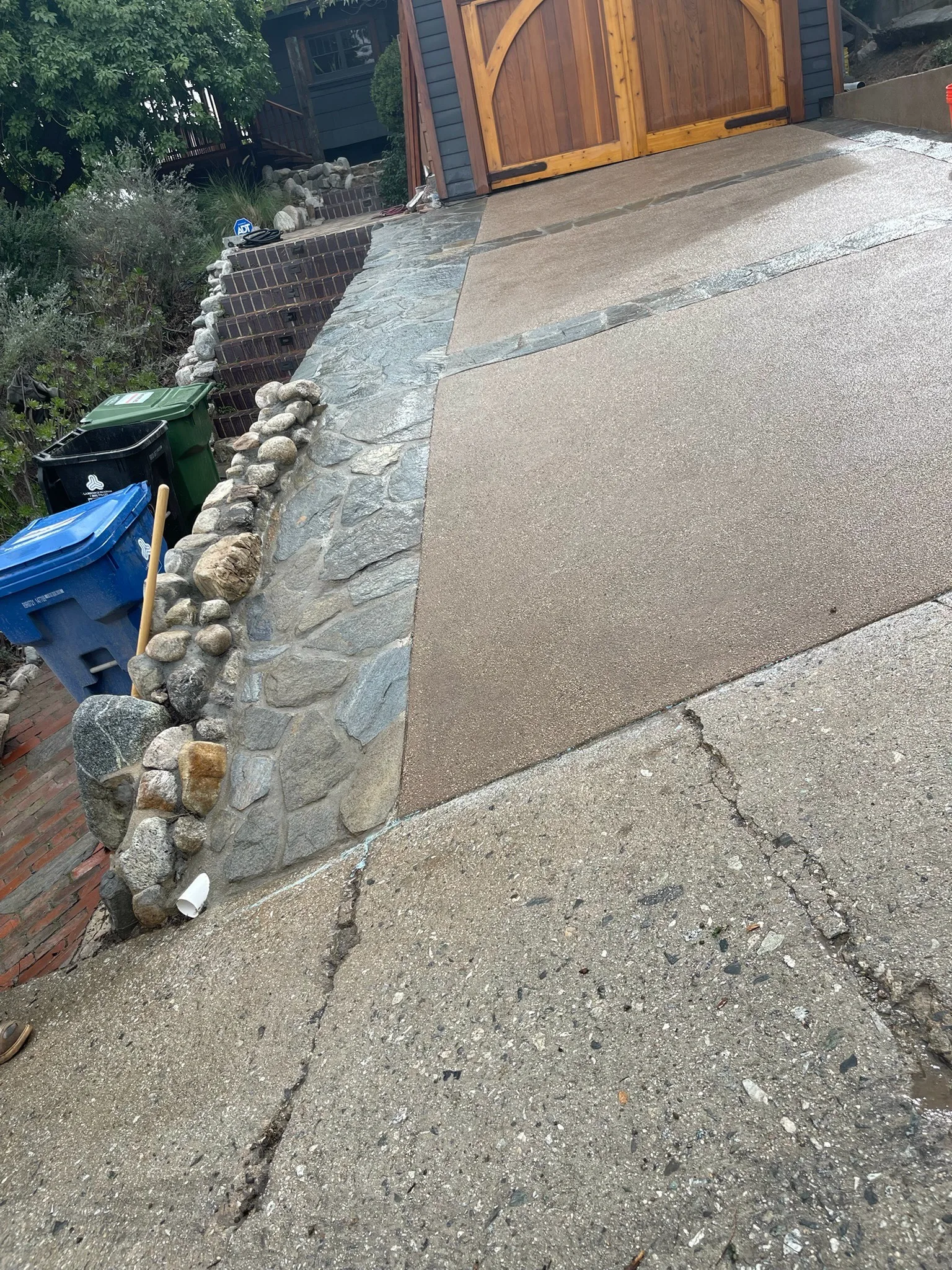
Driveways, patios, pool decks, steps, walkways and slabs — formed and poured on compacted base, finished the way you pick.
Learn More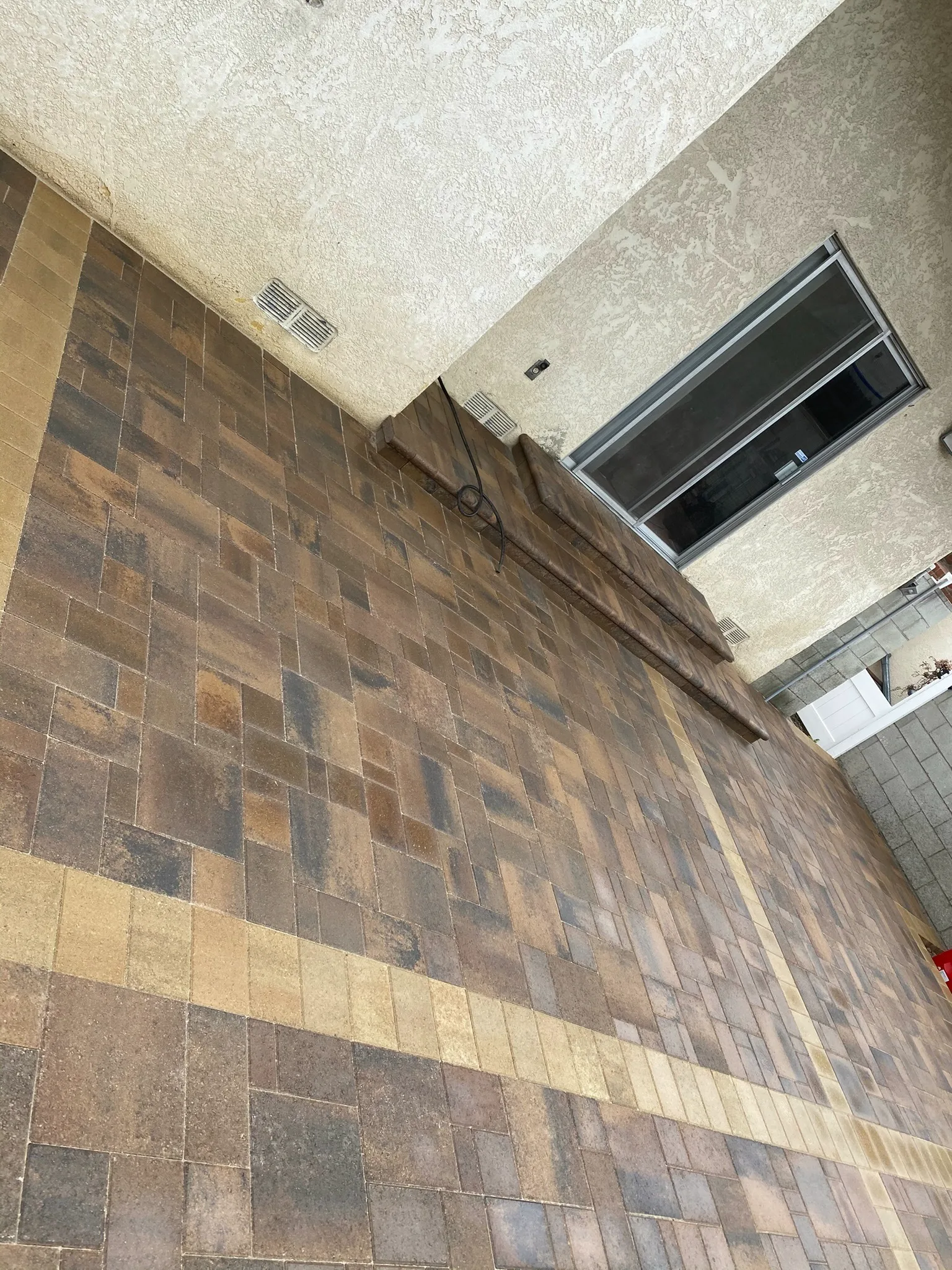
Interlocking paver driveways, patios, walkways and pool decks — real base prep, tight patterns, edges that hold.
Learn MoreHow LA hillside retaining walls really work: drainage as the failure point, the 4-foot engineering line, rebuild-vs-repair verdicts, and what walls cost.
Read more →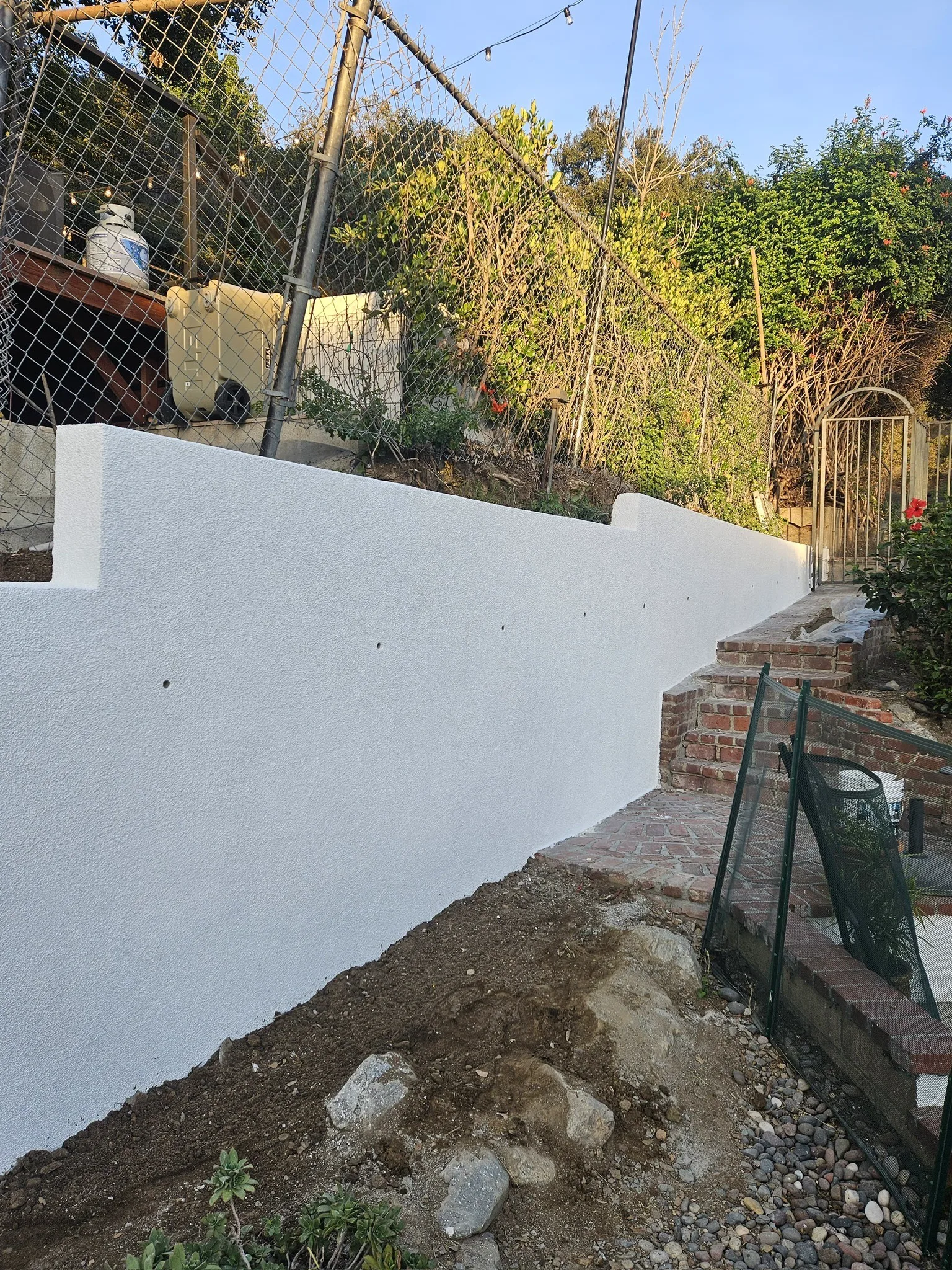
What retaining walls cost in Los Angeles in 2026: real per-linear-foot ranges by wall type and height, what engineering adds, and what moves your number.
Read more →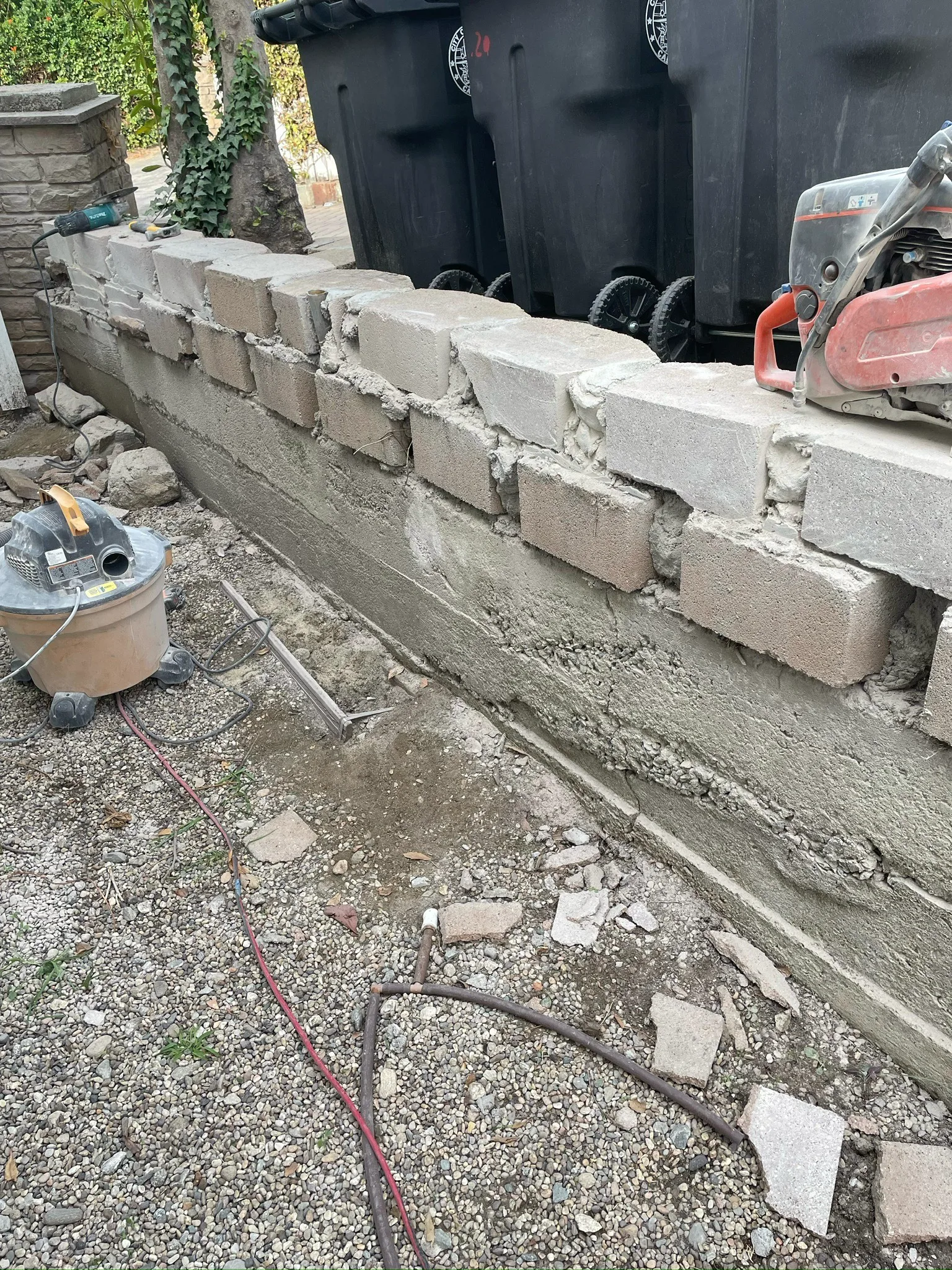
When LA retaining walls need permits: the 4-foot rule, the surcharge trigger, hillside-area rules where every wall needs a permit, and what engineering involves.
Read more →Brick, block, stone and concrete are our whole trade — not a sideline. Footings, coursing, drainage and finish details done the traditional way, because that is why masonry lasts.
Hillside walls with real drainage, slabs built for expansive soil, finishes that suit Spanish, Craftsman and modern houses. This is Los Angeles work by people who know Los Angeles lots.
We look at the site, flag permits and engineering honestly, and put the price and timeline in writing. No phone guesses, no surprise change orders for things we should have seen.
Walls, flatwork, veneer, fire features and tile from one contractor — so materials match, schedules hold, and the finished yard reads as one design instead of four handoffs.
A wall that worries you, a driveway past its best, or a backyard ready to become the good part of the house? Call or send the form and we will look at the site with you and hand you a straight written quote.
Tell us about your project — we’ll get right back to you.