Brick Masonry
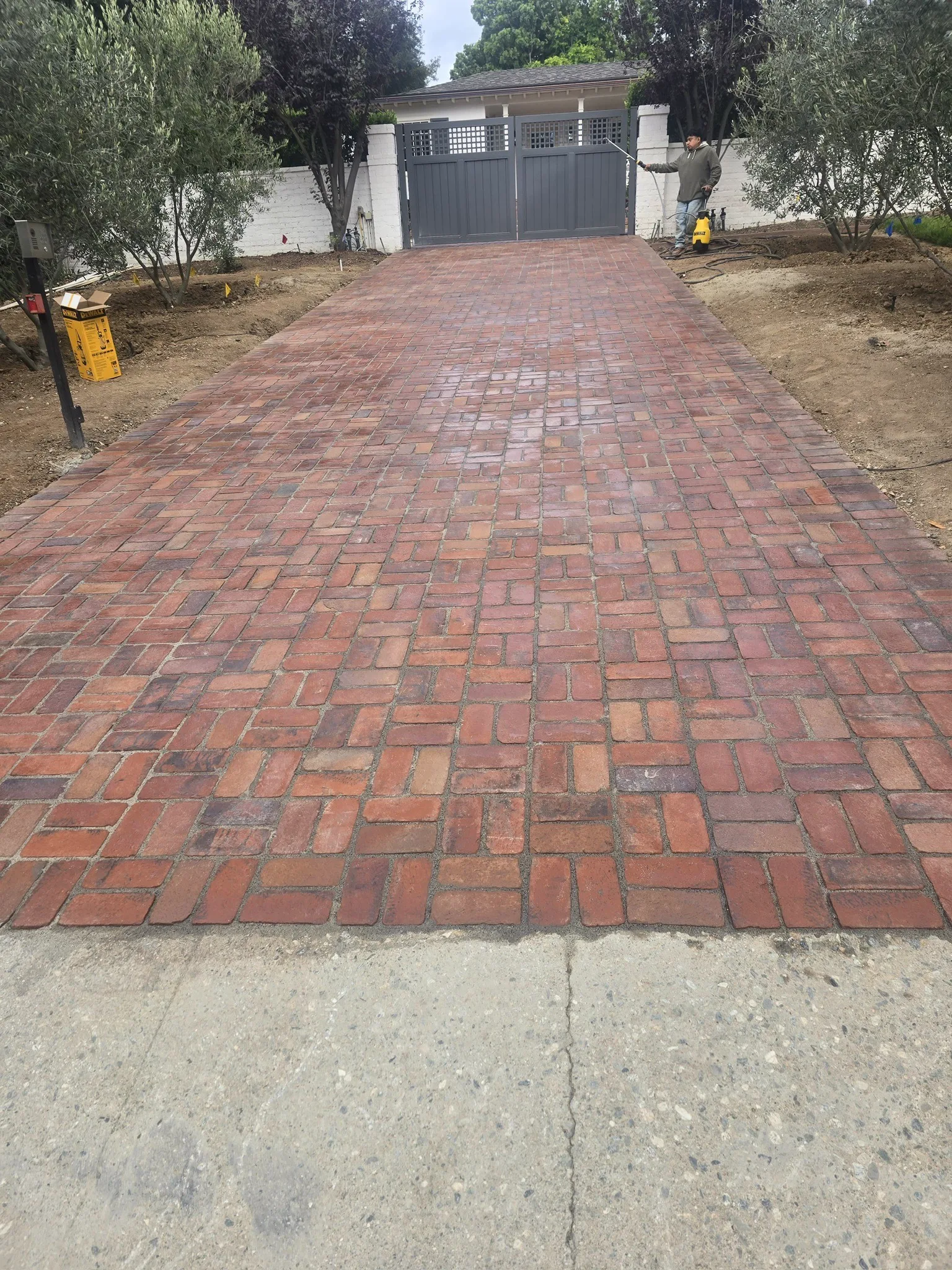
Brick walls, steps, walkways, planters and full brick driveways — plus brick veneer over existing walls. Classic material, clean coursing.
Learn More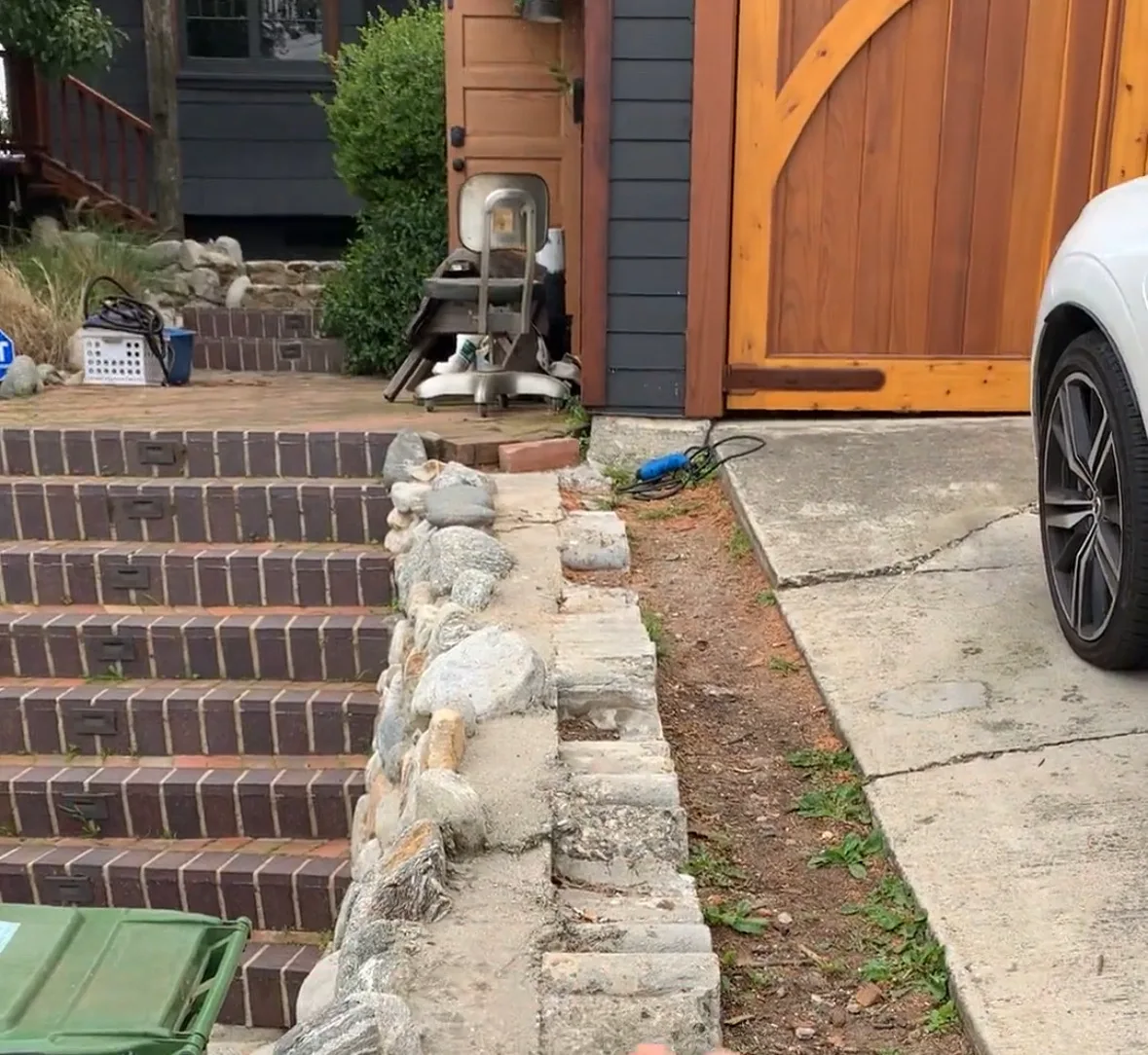
Brick repair is daily work for us across Los Angeles, from Pasadena and Glendale out to the South Bay. We repoint mortar joints that have gone soft and cut out brick that is spalling. Garden walls that have leaned, cracked or taken a car bumper get rebuilt section by section. Brick steps, porches, patios, planters and columns come in on the same call. This work sits under our wider stone, block and stucco repairs, and old brick asks for its own mortar.
Most calls start with mortar that crumbles and falls out of the joints when you touch it. Others start with a leaning wall, or brick faces flaking off where the sprinklers hit. Every brick repair starts by probing the joints to see how deep the soft mortar runs. We look at the footing and the drainage too, because those set what the repair has to be. Then you get a written quote for the fix, priced from the wall itself. Quotes are free, and you can request a written estimate any time.
Tell us about your project — we’ll get right back to you.
Much of the brick we repair went up between 1900 and 1940, on Craftsman and Spanish era houses. Those masons used soft, lime rich mortar on purpose, so the mortar wore out before the brick did. A century later, the joints are at the end of that first life and powder out under a screwdriver. That is normal, and it is the easiest brick repair there is.
In Los Angeles, water does most of the damage, and sprinklers are the usual source. Tree roots lift planters and walkways, and clay soil moves in every wet season. Shaking works old garden walls loose, since walls from that era carry no steel inside. Water that cannot escape leaves white efflorescence on the face, and salt inside the brick pops that face off. That is spalling, and new mortar alone will not stop it.
Repointing is the core of brick repair, and it means cutting old mortar out and packing new mortar in. Depth is what makes it hold. Preservation guidance puts the removal depth at two to two and a half times the joint width. On most brick joints that lands between half an inch and one inch. Cut shallower and the new mortar works its way back out in a few years.
New mortar has to be softer than the brick, so movement and water work the joint instead. Soft old brick gets a lime rich Type O or Type N mix, roughly 350 to 750 psi. Hard Type S or Type M mortar, at 1,800 to 2,500 psi, is what breaks old brick down. We match the sand and color, then tool the joint to the profile on the wall. Chimney stacks follow the same rules, and that work sits on our chimney stacks and crowns page.
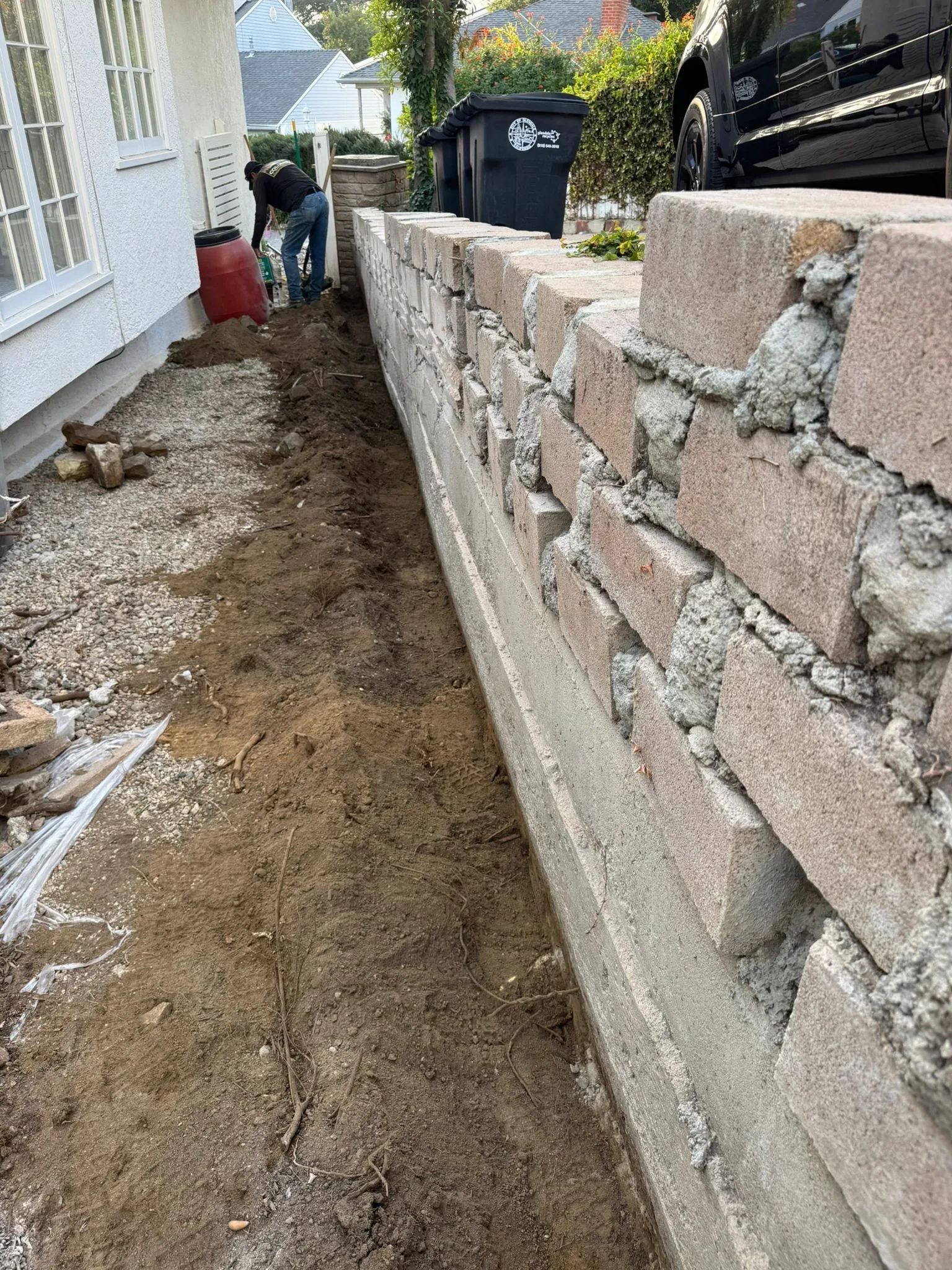
Brick wall repair starts with reading what moved and why. A hairline crack in one joint is different from a crack that steps down through the wall. Cars clip garden walls, roots push them over, and old footings settle under the weight. Where the brick above is still sound, we open the wall down to the damage and rebuild that section.
Rebuilding a section is careful work, because a fresh patch of brick shows from the street. We save and relay the original brick, then tie the new coursing into the old. One customer came to us after other companies said the brick wall had to come down. It did not, which is the usual answer when the footing is sound. When a wall is truly past saving, some come back as concrete block garden walls with a brick face.
Front steps take the most traffic, so they fail first. A settled step is a base problem, so we lift the brick and correct the base underneath. The treads go back at an even riser height, pitched to shed water. Loose treads and soft mortar on porch landings are the same brick repair. One of our own jobs put clay brick steps beside an original river rock wall, matched so the two agree.
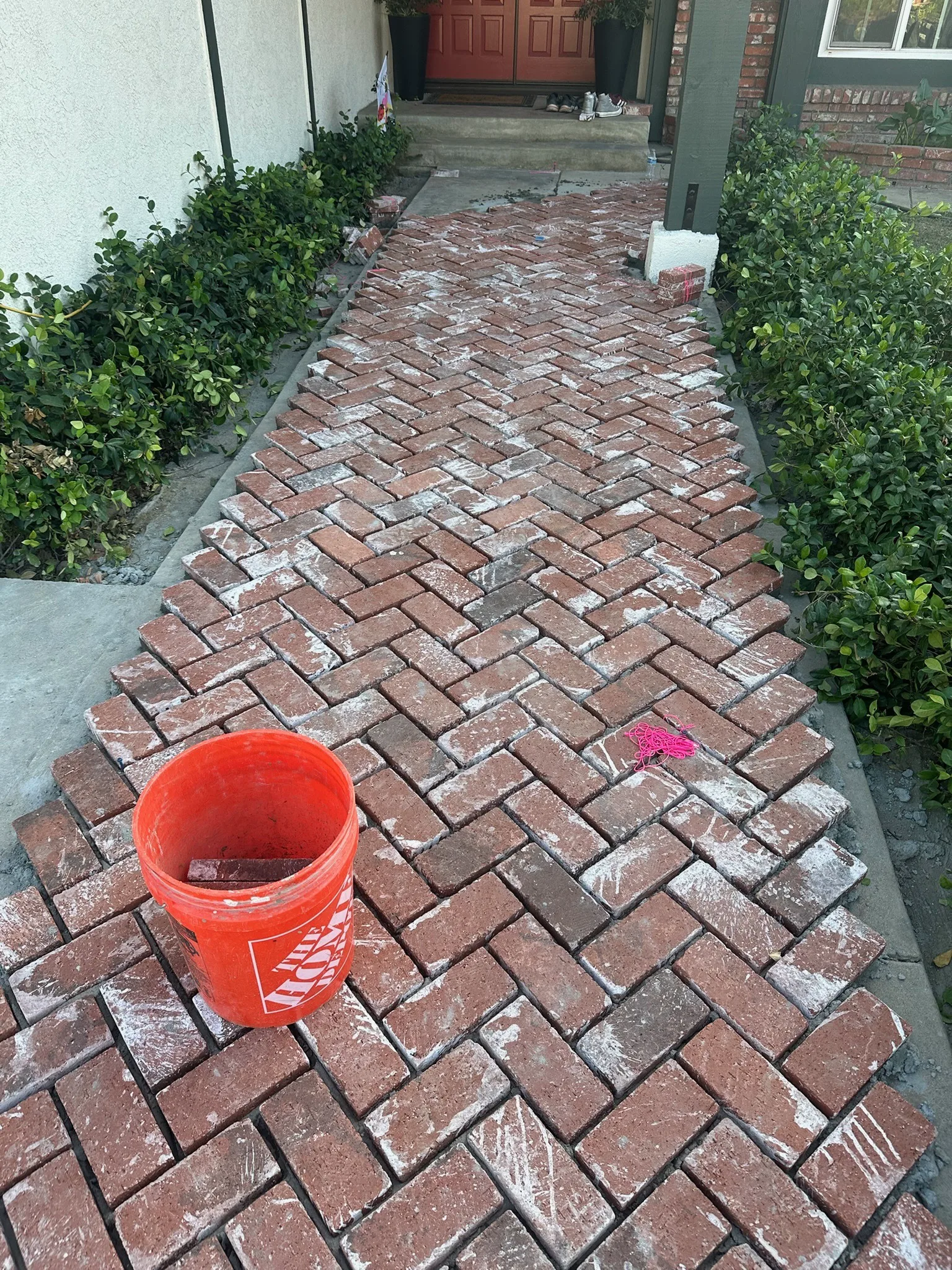
Brick patios and walkways settle the same way. We lift the sunken field, rebuild the base under it, and relay the pattern, herringbone included. Planters split as roots push out, and columns loosen when a cracked cap lets water in. One customer had us extend a brick patio, swap some flagstone and repair a low brick wall. New brick beside a repair is the same trade, shown on our new brick walls and walkways page.
Matching is the part of brick repair people notice from the sidewalk. The exact brick on an old house cannot be bought new, so every brick that survives gets saved and relaid. Where more is needed, we source brick to the size and color range of the original. Mortar is tinted to the joints as they look today, after a century of weather. Pasadena and San Marino carry the most of this brick, and masonry work in Pasadena covers that area.
Permits come up on walls more than on joints. In Los Angeles, a masonry fence wall over three and a half feet needs a building permit. Zoning caps a front yard wall at the same height, measured from the ground beside it. Side and rear walls can run to eight feet on a standard lot, or six feet on a hillside lot. Glendale, Burbank and Pasadena set their own thresholds, so we check the city before a rebuild is priced.
Free, no-obligation estimates across Glendale, Burbank and Greater Los Angeles.
(424) 653-0453From the first look at the site to the final walk-through, here is exactly how it goes.
We look at the project where it lives: the grade, the access, what is being held back or built on, and what you want the finished space to look like.
You get a written quote with a real timeline. It spells out materials, finishes, demolition and haul-off, and flags permit or engineering questions before anything is built.
Proper base and footings, clean courses, real drainage behind every wall. The details you cannot see are the reason the work lasts, and we treat them that way.
We walk the finished work together — joints, finishes, cleanup, the whole job. Done means you have looked at every part of it and said so.
Common questions about brick repair across Glendale, Burbank and Greater Los Angeles. Don't see yours? Give us a call — we're happy to help.
Brick walls, steps, walkways, planters and full brick driveways — plus brick veneer over existing walls. Classic material, clean coursing.
Learn More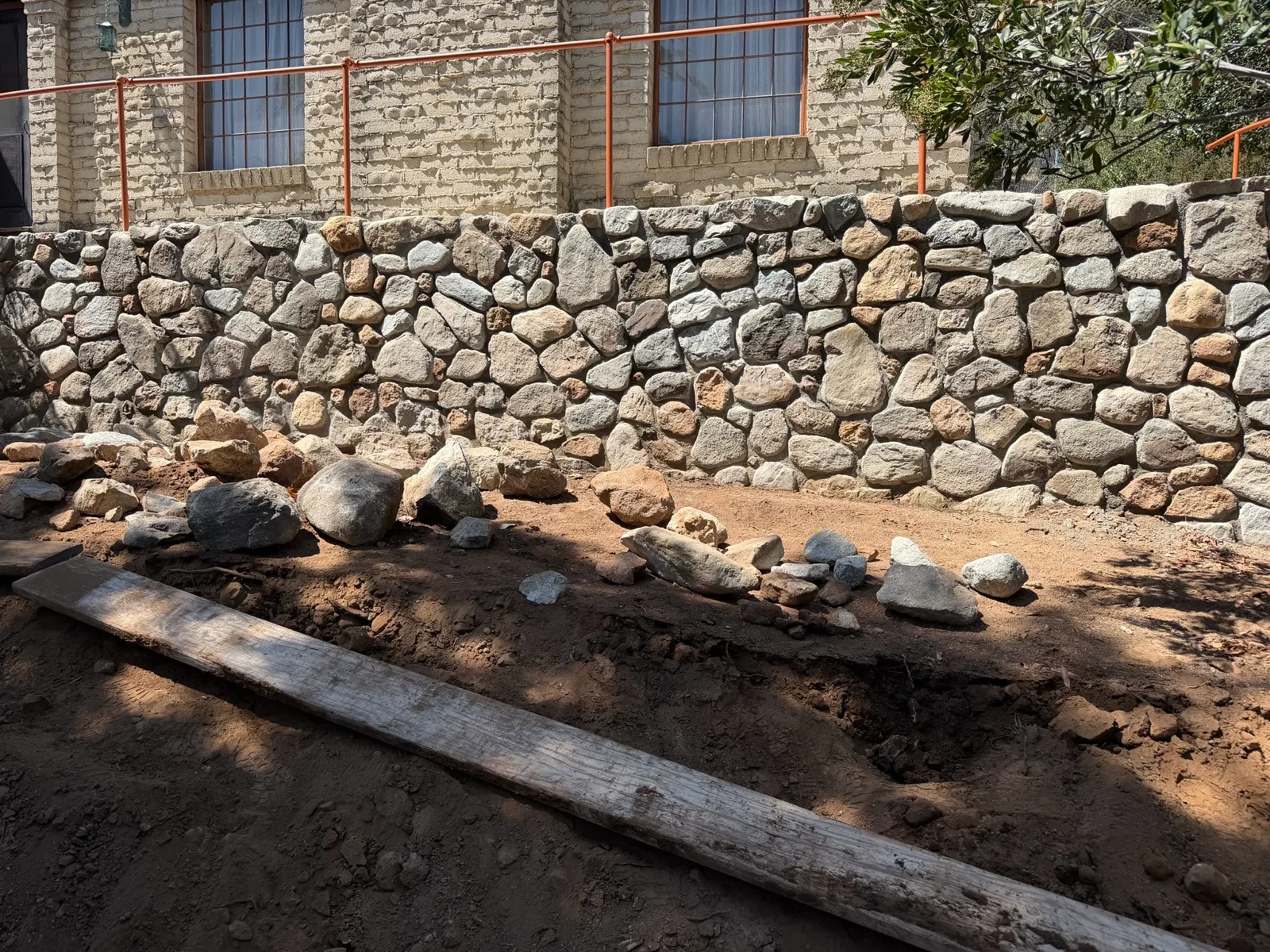
Natural stone walls, river rock work, flagstone patios and paths, and stone veneer on walls, columns and outdoor kitchens.
Learn More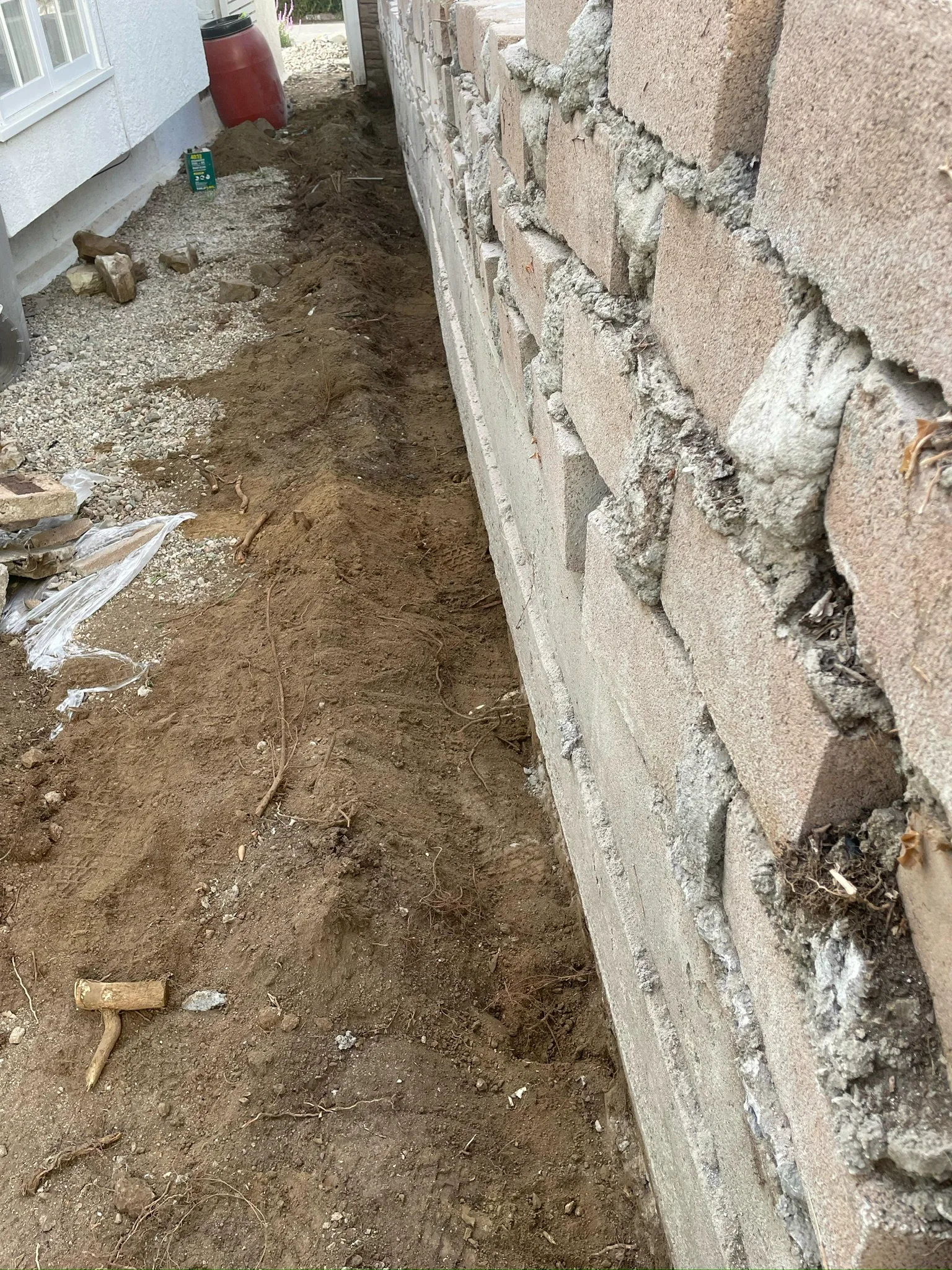
Engineered block and concrete retaining walls with real drainage — stucco, stone or brick finished — plus failing walls rebuilt right.
Learn More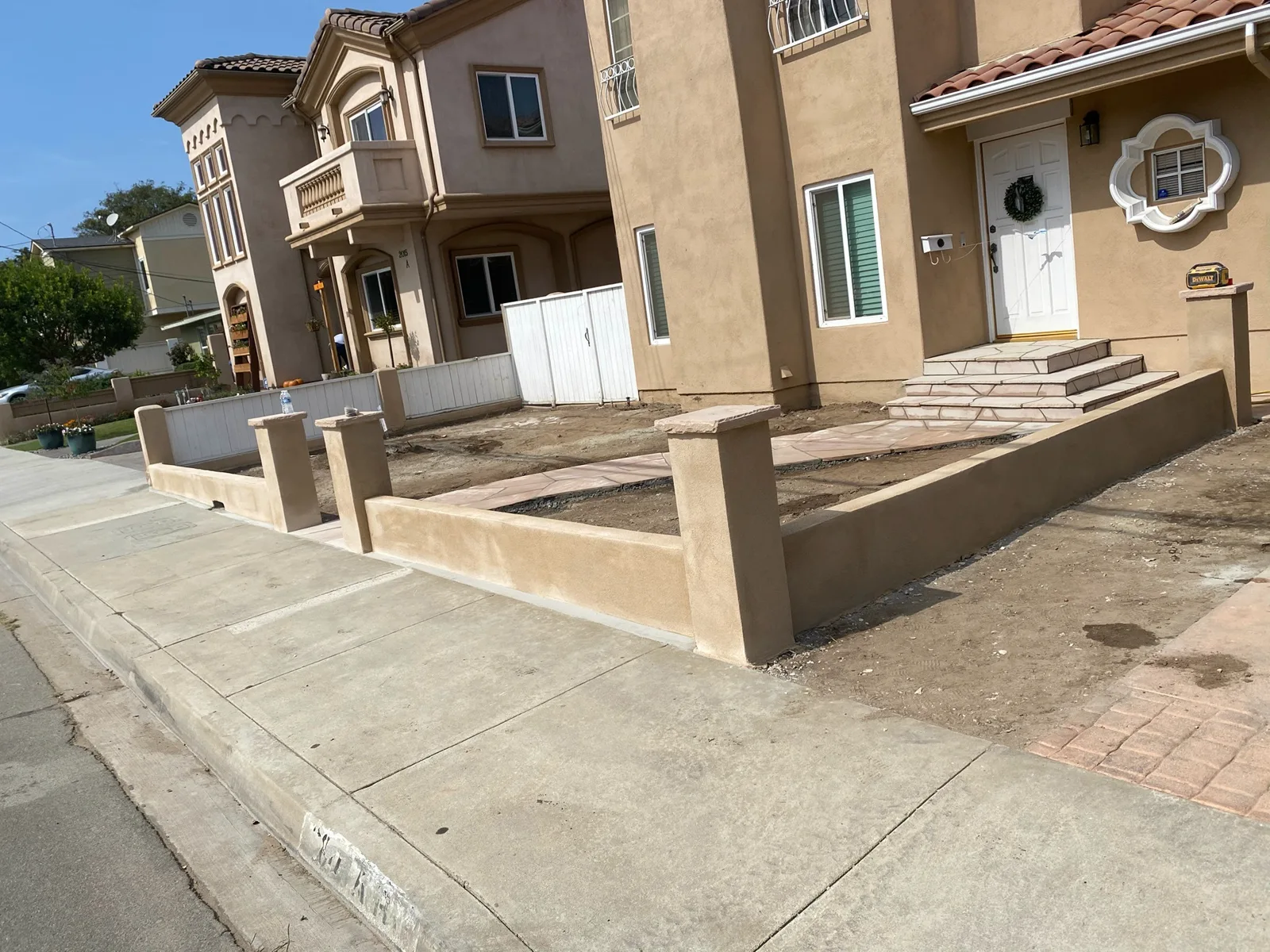
Property line walls, privacy walls, courtyard walls and gated front-yard enclosures — reinforced block, finished in stucco, stone or left clean.
Learn More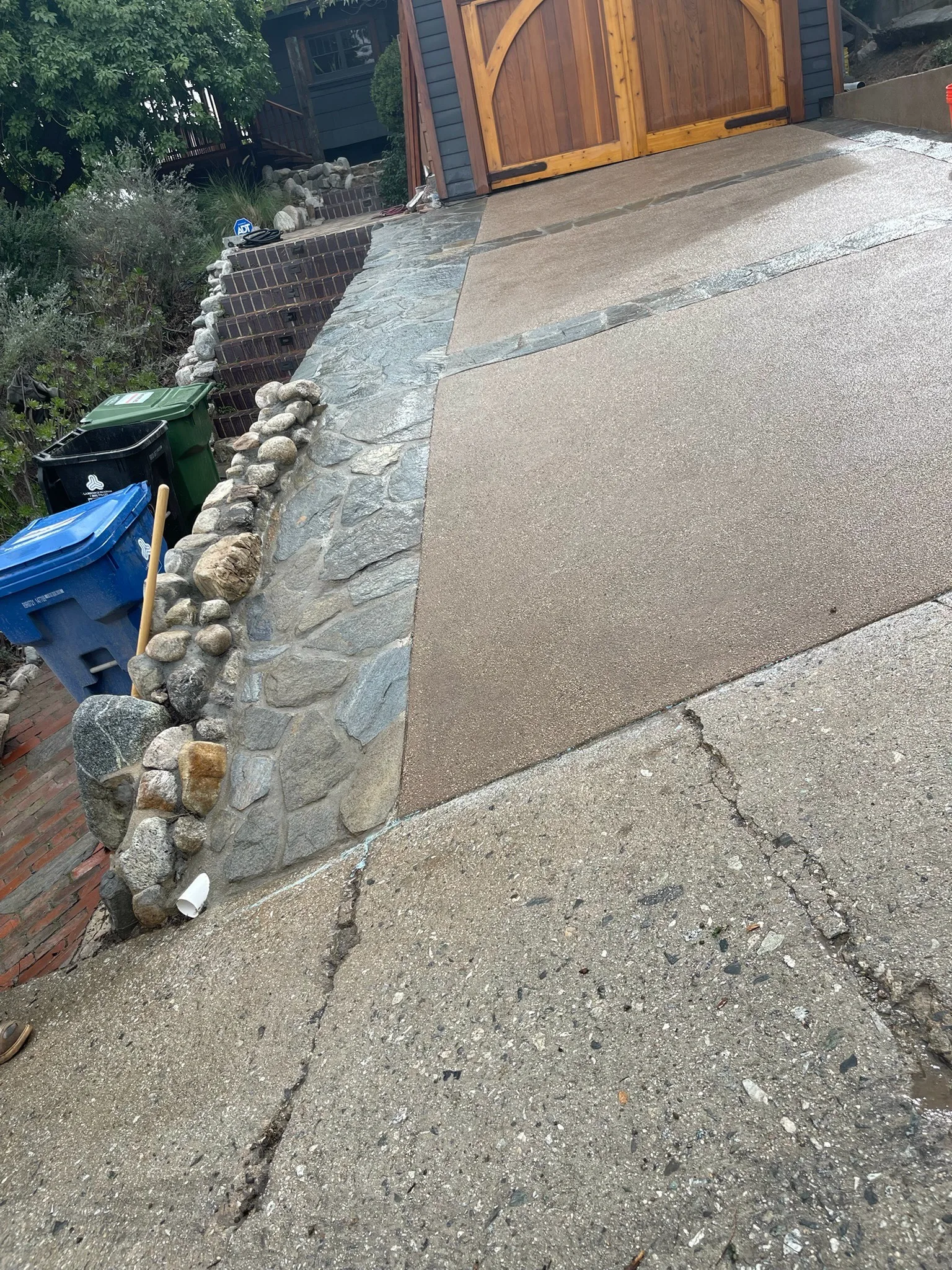
Driveways, patios, pool decks, steps, walkways and slabs — formed and poured on compacted base, finished the way you pick.
Learn More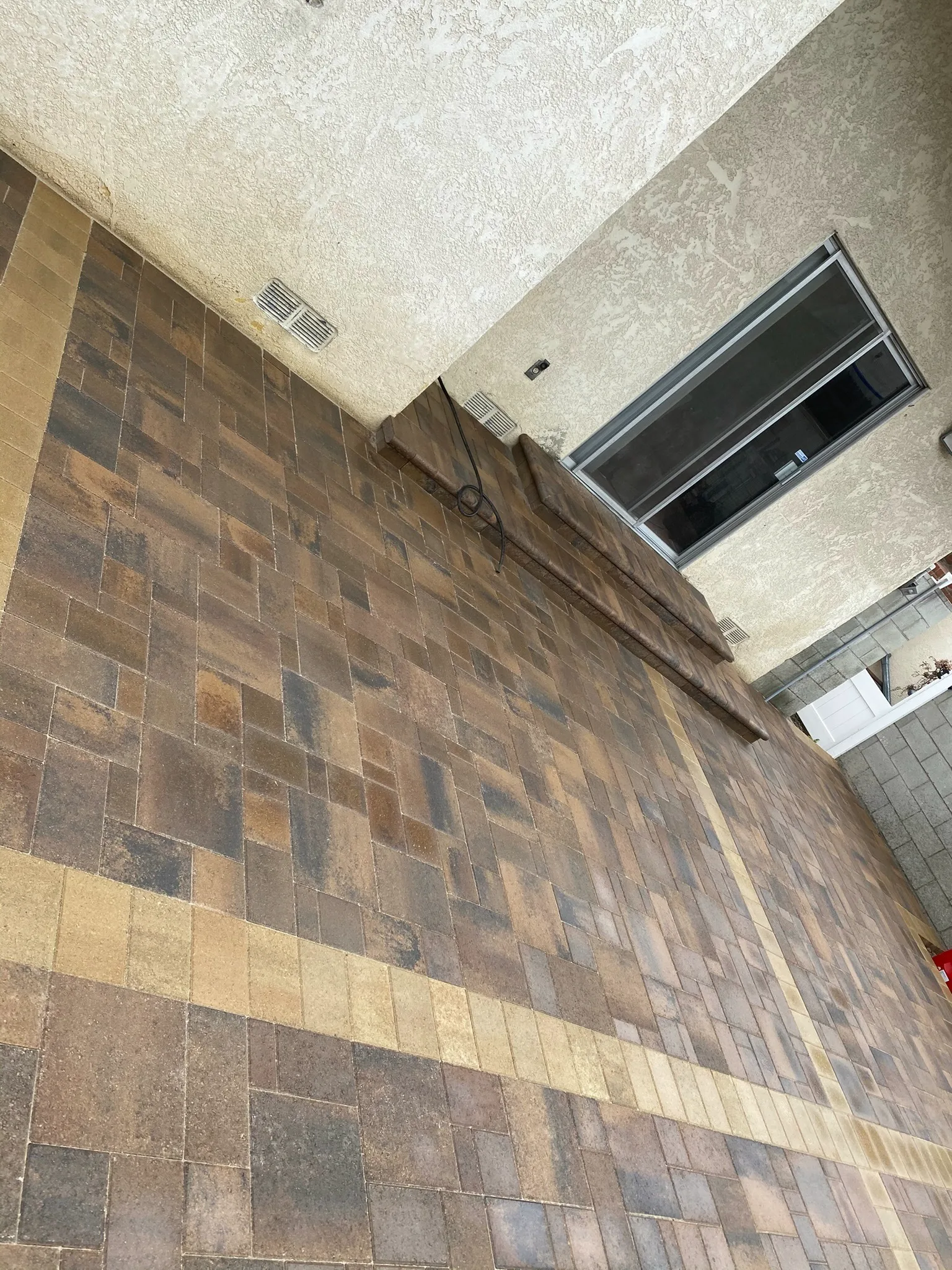
Interlocking paver driveways, patios, walkways and pool decks — real base prep, tight patterns, edges that hold.
Learn MoreWhat brick repair and repointing cost in LA in 2026: per-square-foot ranges, small-repair to whole-wall pricing, and why matching mortar protects old brick.
Read more →What chimney repair costs in LA in 2026: crown, repointing and rebuild ranges, why West Coast prices run higher, and the LADBS rule that decides rebuilds.
Read more →Brick, block, stone and concrete are our whole trade — not a sideline. Footings, coursing, drainage and finish details done the traditional way, because that is why masonry lasts.
Hillside walls with real drainage, slabs built for expansive soil, finishes that suit Spanish, Craftsman and modern houses. This is Los Angeles work by people who know Los Angeles lots.
We look at the site, flag permits and engineering honestly, and put the price and timeline in writing. No phone guesses, no surprise change orders for things we should have seen.
Walls, flatwork, veneer, fire features and tile from one contractor — so materials match, schedules hold, and the finished yard reads as one design instead of four handoffs.
A wall that worries you, a driveway past its best, or a backyard ready to become the good part of the house? Call or send the form and we will look at the site with you and hand you a straight written quote.
Tell us about your project — we’ll get right back to you.