Brick Masonry
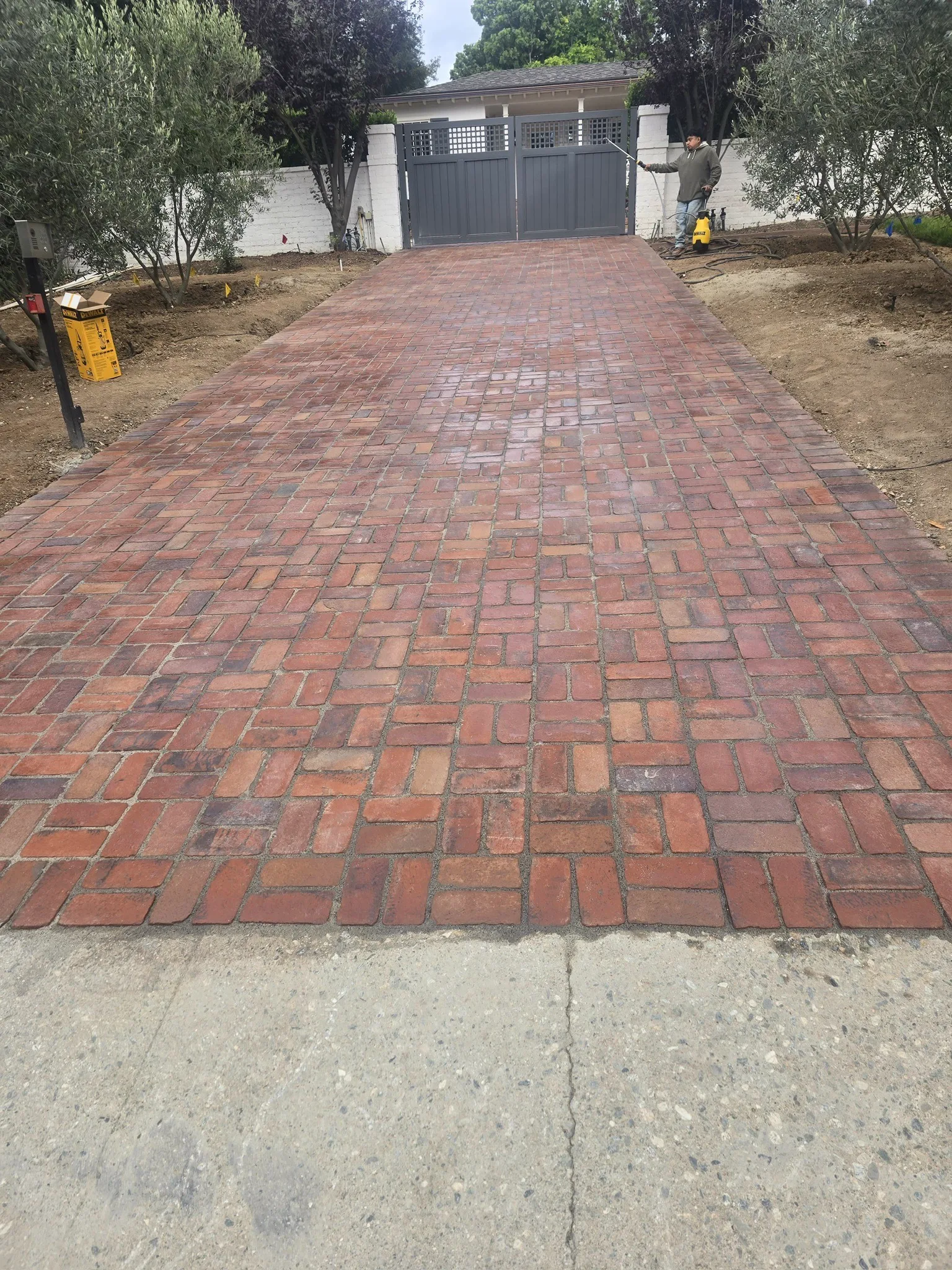
Brick walls, steps, walkways, planters and full brick driveways — plus brick veneer over existing walls. Classic material, clean coursing.
Learn More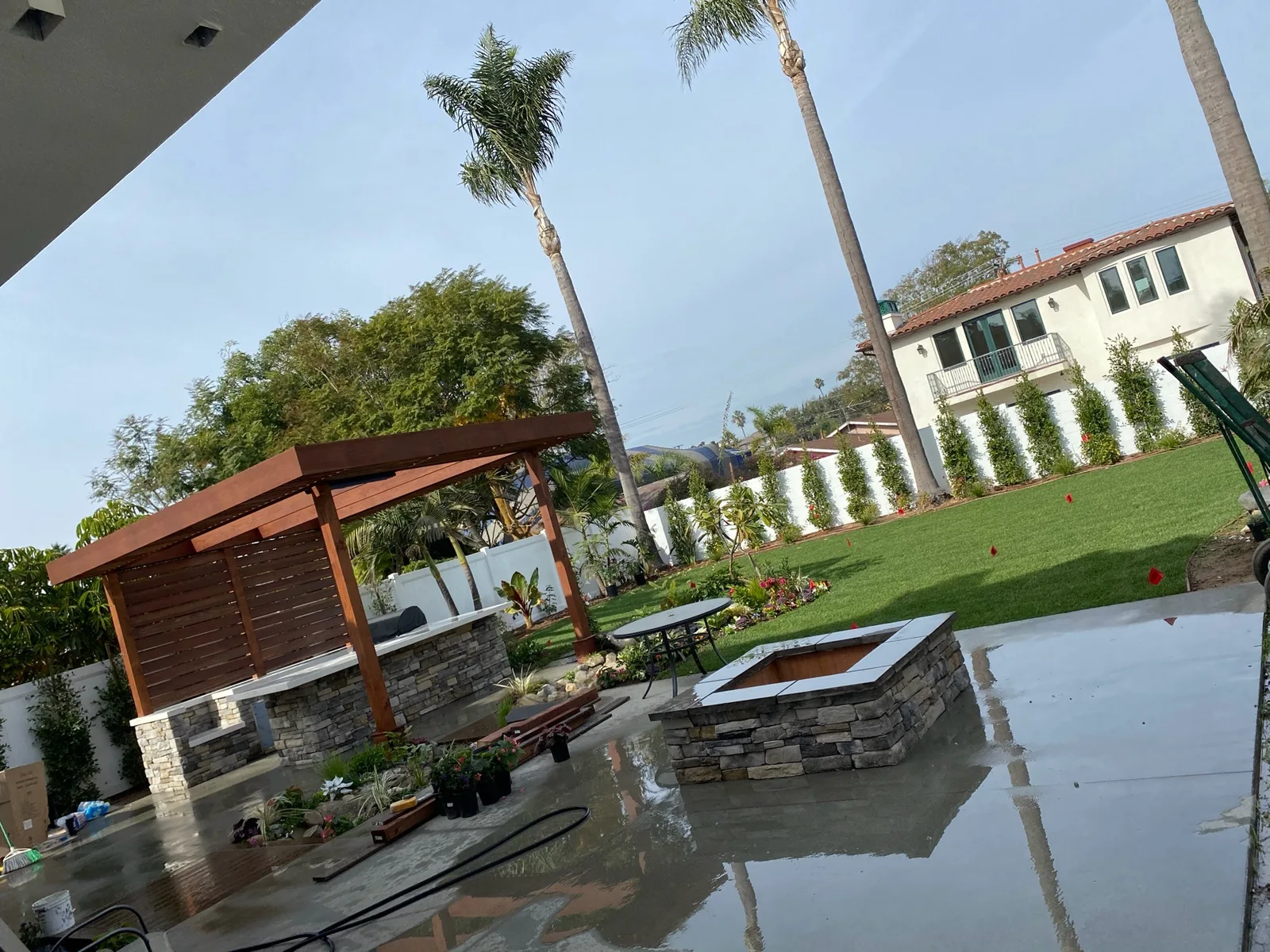
Fire pits are the part of a Los Angeles backyard that gets used all year. We build them in block, on real footings, faced in stone, brick or stucco. Shapes run round, square or linear, with gas over fire glass or lava rock. We build wood-burning pits where the rules allow, and outdoor fireplaces with the seat walls and benches beside them. They sit on backyard patio surfaces in flagstone, pavers or concrete, from the South Bay to the foothills.
Most calls start the same way: a patio, a view, and nothing to sit around after dark. Sometimes it is a steel bowl that scorched the flagstone and never got used. The first visit costs nothing: we look at the wind, the slope, and the distance to the house. We check what the patio can carry, and where the gas can come from. Then you get a layout, material samples and a written quote with the fire pit drawn where it belongs.
Tell us about your project — we’ll get right back to you.
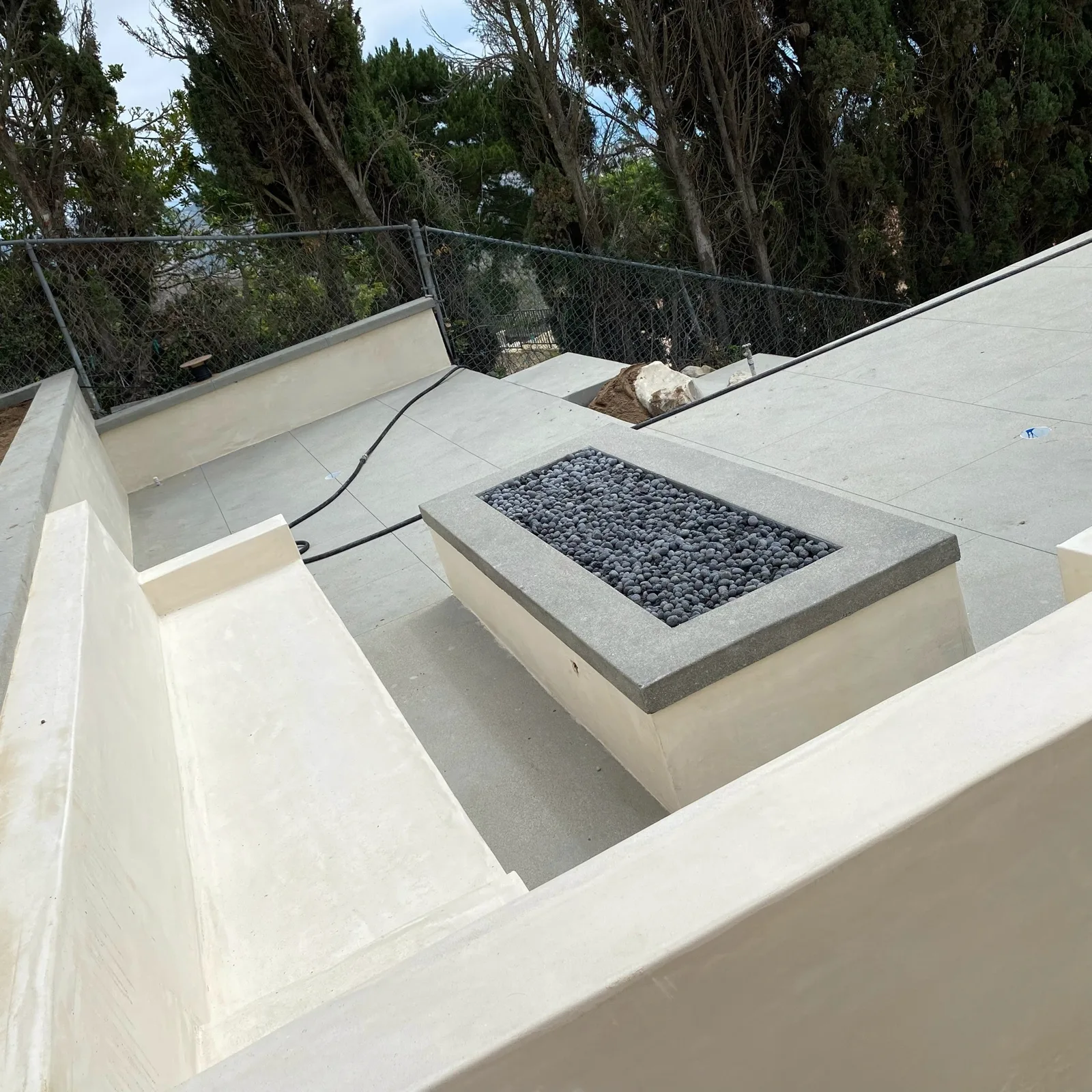
A built-in fire pit is a small masonry structure. We pour a footing, lay a block core, and face it in brick, stucco or cut stone and veneer. Round pits read soft in a flagstone field. Square and linear pits read architectural, and a longer burner fits inside. We land the wall near 18 inches, so the rim holds a drink.
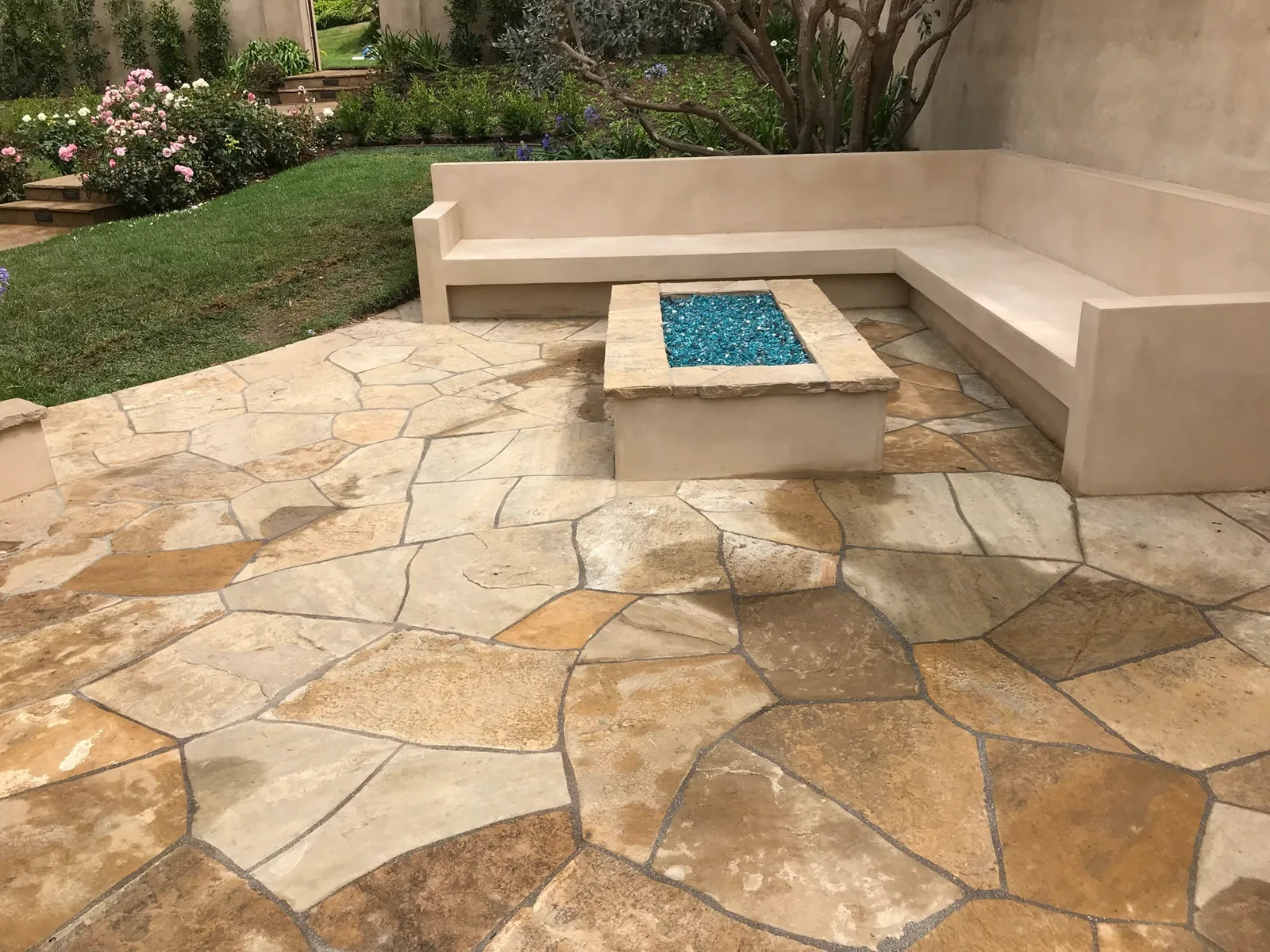
A gas fire pit gets a burner pan, an air gap, and a bed of media on top. Fire glass reflects the flame and reads modern. Lava rock is porous and cheaper, and it hides the burner. A common build uses lava rock as the base with fire glass over it. We have set blue fire glass into benches on flagstone, and lava rock into a rooftop stucco surround.
A fire pit rarely arrives alone. We have built a linear pit into a seat wall next to an outdoor kitchen on a hillside lot. We have set a square stone-veneer pit on a concrete patio beside a pergola-covered kitchen. Built together, the footings, materials and finishes line up. The kitchen side of that work lives on our BBQ islands and grill counters page.
An outdoor fireplace is real masonry, and the residential code sets the numbers. The footing runs at least 12 inches thick and reaches 6 inches past the fireplace on every side. The firebox is lined in firebrick at least 2 inches thick, with joints no wider than a quarter inch. Above the firebox sit the throat and the smoke chamber, then the flue that pulls the smoke out.
Chimney height is not a guess. A chimney has to stand 2 feet above anything within 10 feet, and 3 feet above the roof. The code adds bars, ties and anchorage for fireplaces in the higher seismic design categories. We face fireplaces in brick, stone or stucco, and build the hearth and seat wall beside them. Customers have hired us to build fireplaces, one of them in stone and marble.
Gas suits most Los Angeles yards, and the air rules are part of why. South Coast AQMD Rule 445 covers permanently installed indoor and outdoor devices that burn wood. On a declared no-burn day, November through February, running one is not allowed. Since 2009 the rule has also barred new permanent wood-burning fireplaces and pits in new developments, and a new permanent wood-burning device at an existing home has to be one of the cleaner types the rule lists. That makes gas the build for most Los Angeles yards, and we build wood-burning only where the rule allows it.
Gas features sit outside that curtailment, and they light on a switch. Los Angeles requires a plumbing permit for any gas piping. The one exception is a run under 6 feet to an appliance in the same room. A licensed C-36 plumbing contractor pulls that permit and makes the connections. Ignition can be a key valve, a spark igniter, or a system wired by a licensed electrician.
Distance comes first. The California Fire Code keeps a recreational fire 25 feet from a structure or anything combustible. Portable outdoor fireplaces carry a 15 foot rule, with an exception at one and two family homes. We keep fire pits clear of eaves, fences, dry slopes and low branches, and we watch the evening wind. The pit itself sits on flagstone, poured concrete or interlocking paver fields, set to drain away from the seating.
Hillside and view lots take more thought. CAL FIRE issued new fire hazard severity zone maps in 2025, and the Los Angeles foothills rate very high. The state is still drafting Zone 0 rules for the first five feet around a house. Block, stone and concrete are non-combustible, which suits masonry in La Cañada Flintridge and the lots above it. On rooftops we keep the pit low, so the flame sits under the skyline.
A fire pit and an outdoor fireplace are not the same permit job. Los Angeles lists a new structure as building permit work, so a masonry fireplace gets reviewed. Gas piping takes its own plumbing permit, pulled by the plumbing contractor running the line. Hillside lots and HOA review can add a step. Glendale, Burbank and Pasadena run their own fire departments and set their own thresholds.
Price follows the build. Size, veneer material, the length of the gas run, and the chimney on a fireplace move the number most. A pit set into an existing patio costs less than one that needs the patio rebuilt around it. Built with the rest of the yard, a fire feature shares footings, materials and one mobilization. That is why fire pits usually land inside whole backyard builds.
Free, no-obligation estimates across Glendale, Burbank and Greater Los Angeles.
(424) 653-0453From the first look at the site to the final walk-through, here is exactly how it goes.
We look at the project where it lives: the grade, the access, what is being held back or built on, and what you want the finished space to look like.
You get a written quote with a real timeline. It spells out materials, finishes, demolition and haul-off, and flags permit or engineering questions before anything is built.
Proper base and footings, clean courses, real drainage behind every wall. The details you cannot see are the reason the work lasts, and we treat them that way.
We walk the finished work together — joints, finishes, cleanup, the whole job. Done means you have looked at every part of it and said so.
Common questions about fire pits & fireplaces across Glendale, Burbank and Greater Los Angeles. Don't see yours? Give us a call — we're happy to help.
Brick walls, steps, walkways, planters and full brick driveways — plus brick veneer over existing walls. Classic material, clean coursing.
Learn More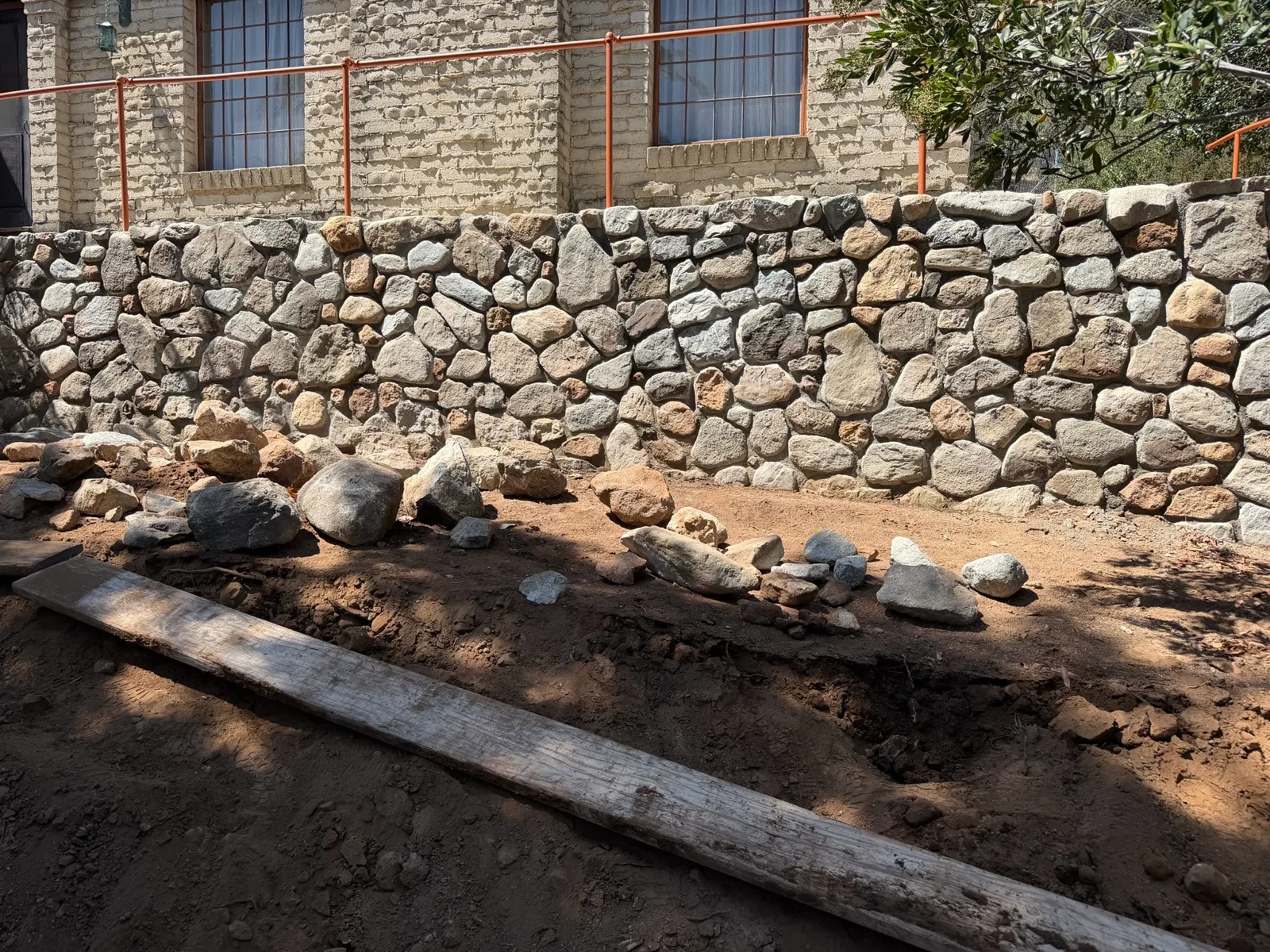
Natural stone walls, river rock work, flagstone patios and paths, and stone veneer on walls, columns and outdoor kitchens.
Learn More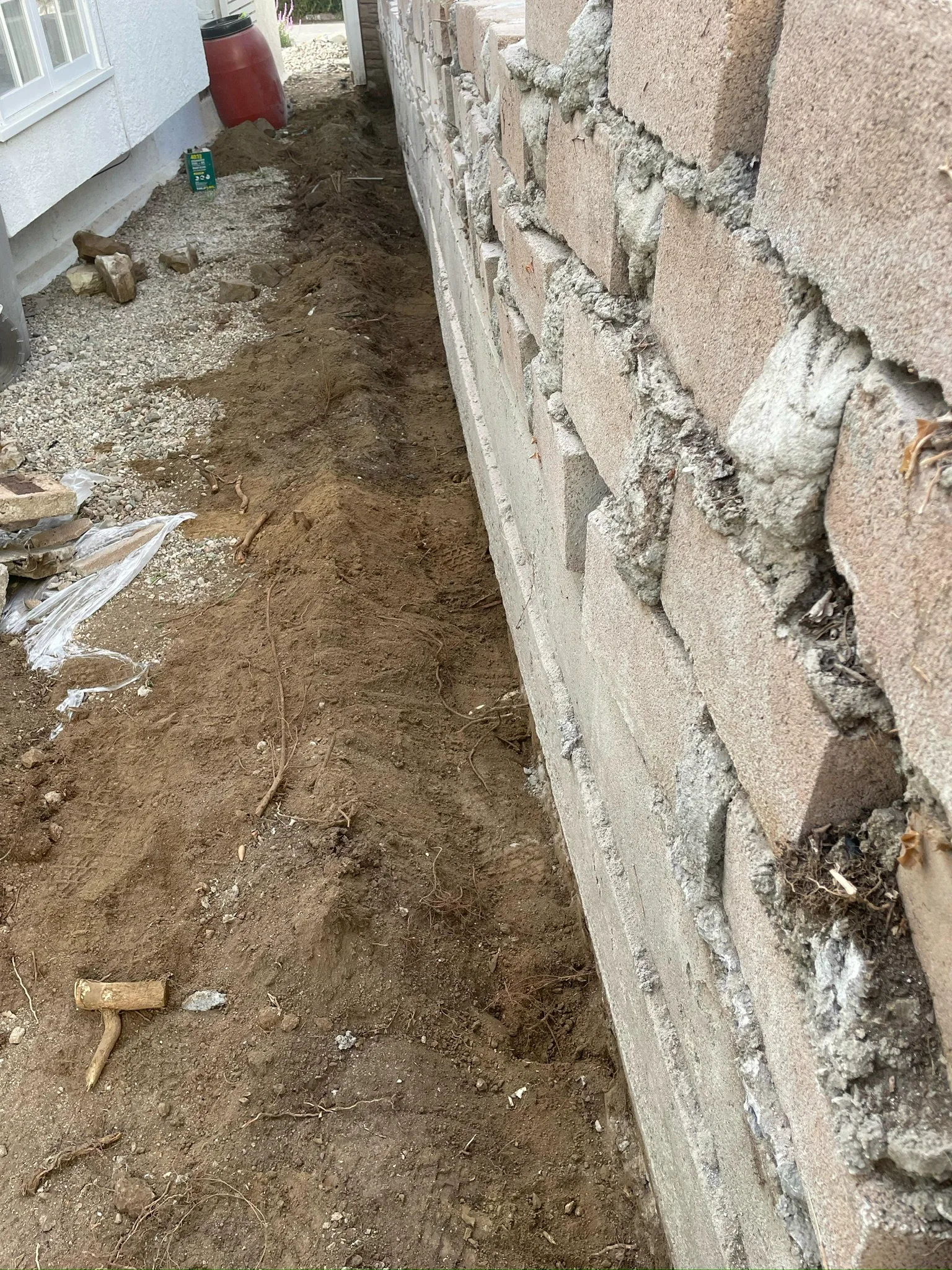
Engineered block and concrete retaining walls with real drainage — stucco, stone or brick finished — plus failing walls rebuilt right.
Learn More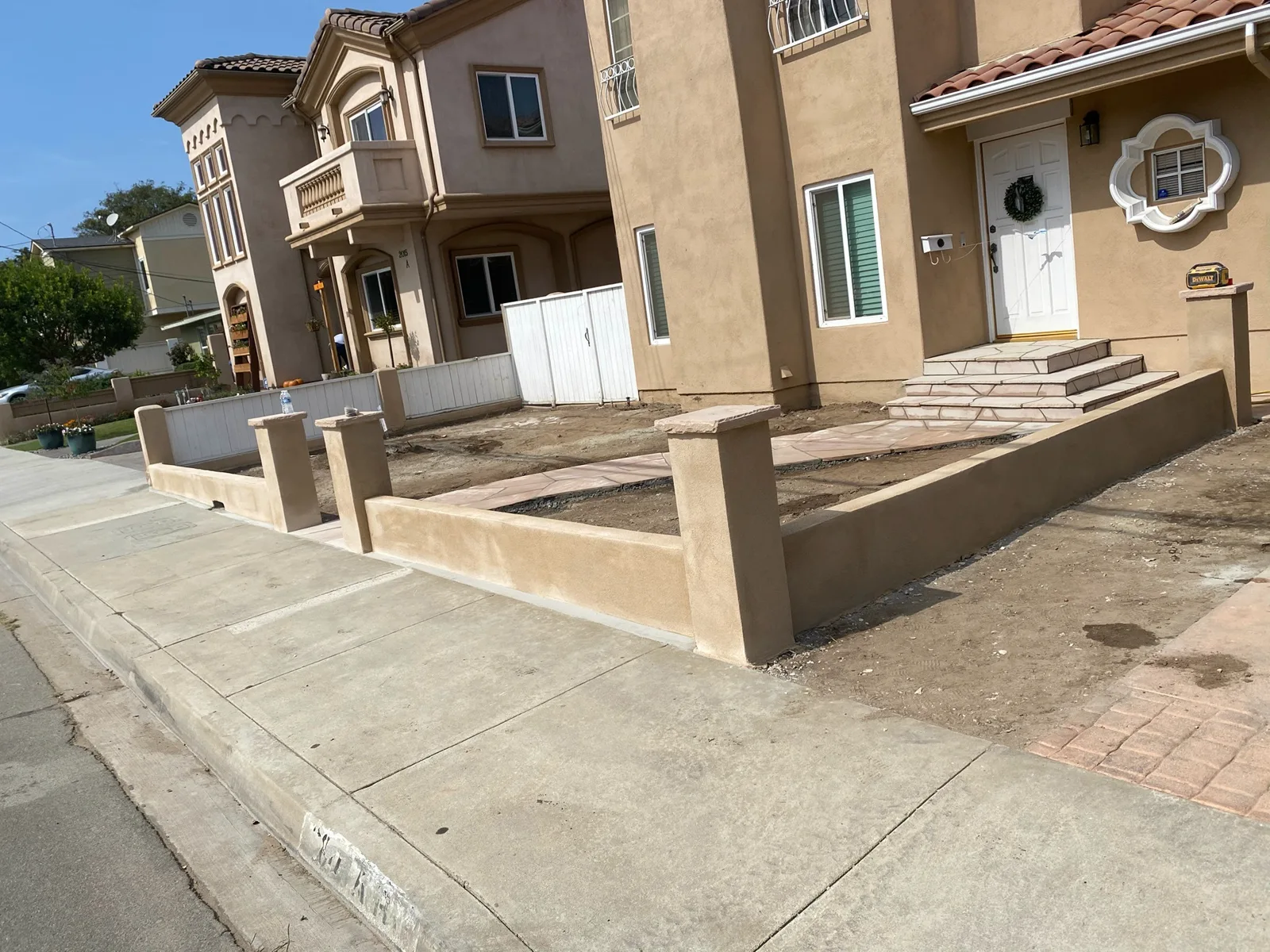
Property line walls, privacy walls, courtyard walls and gated front-yard enclosures — reinforced block, finished in stucco, stone or left clean.
Learn More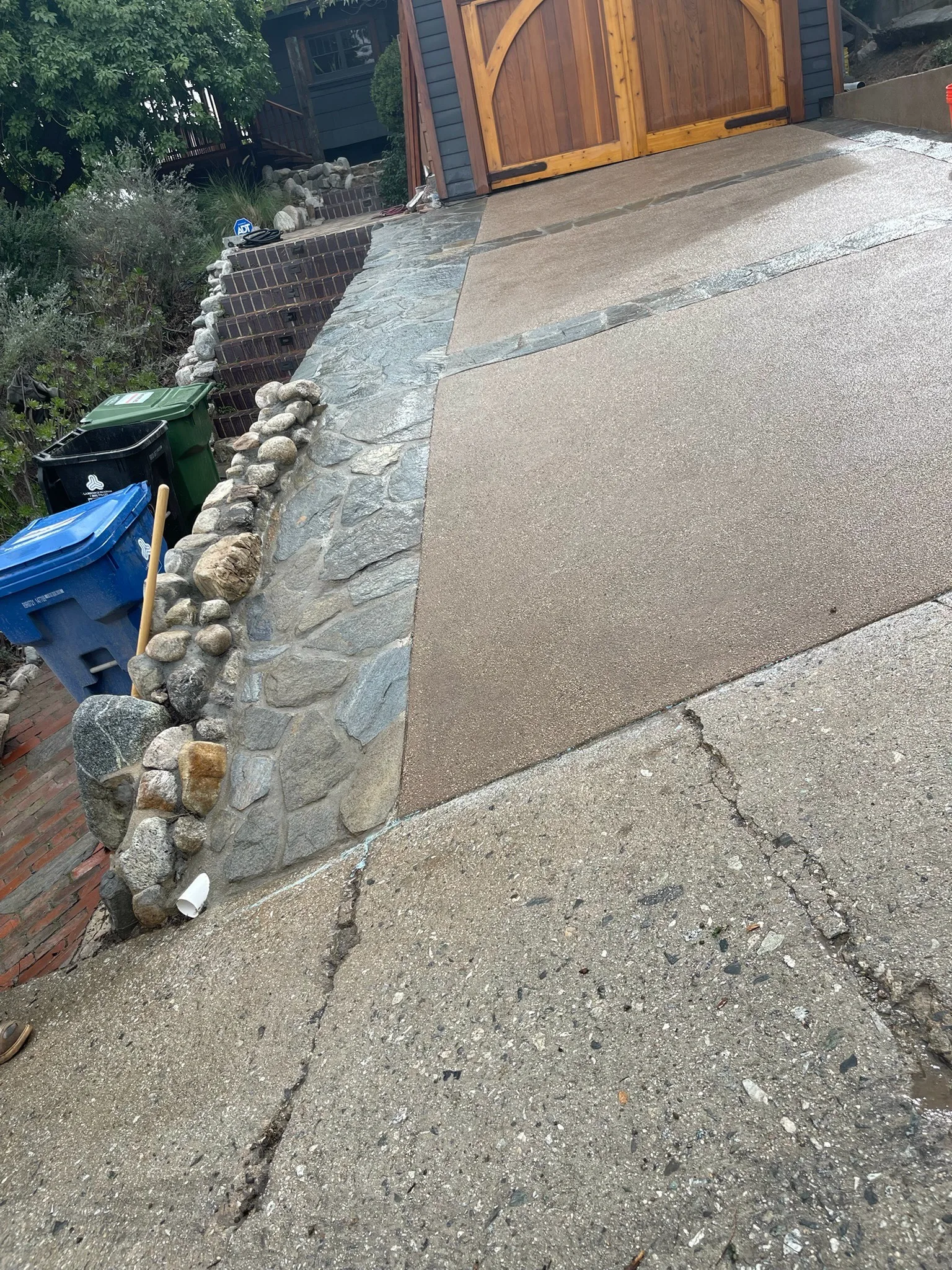
Driveways, patios, pool decks, steps, walkways and slabs — formed and poured on compacted base, finished the way you pick.
Learn More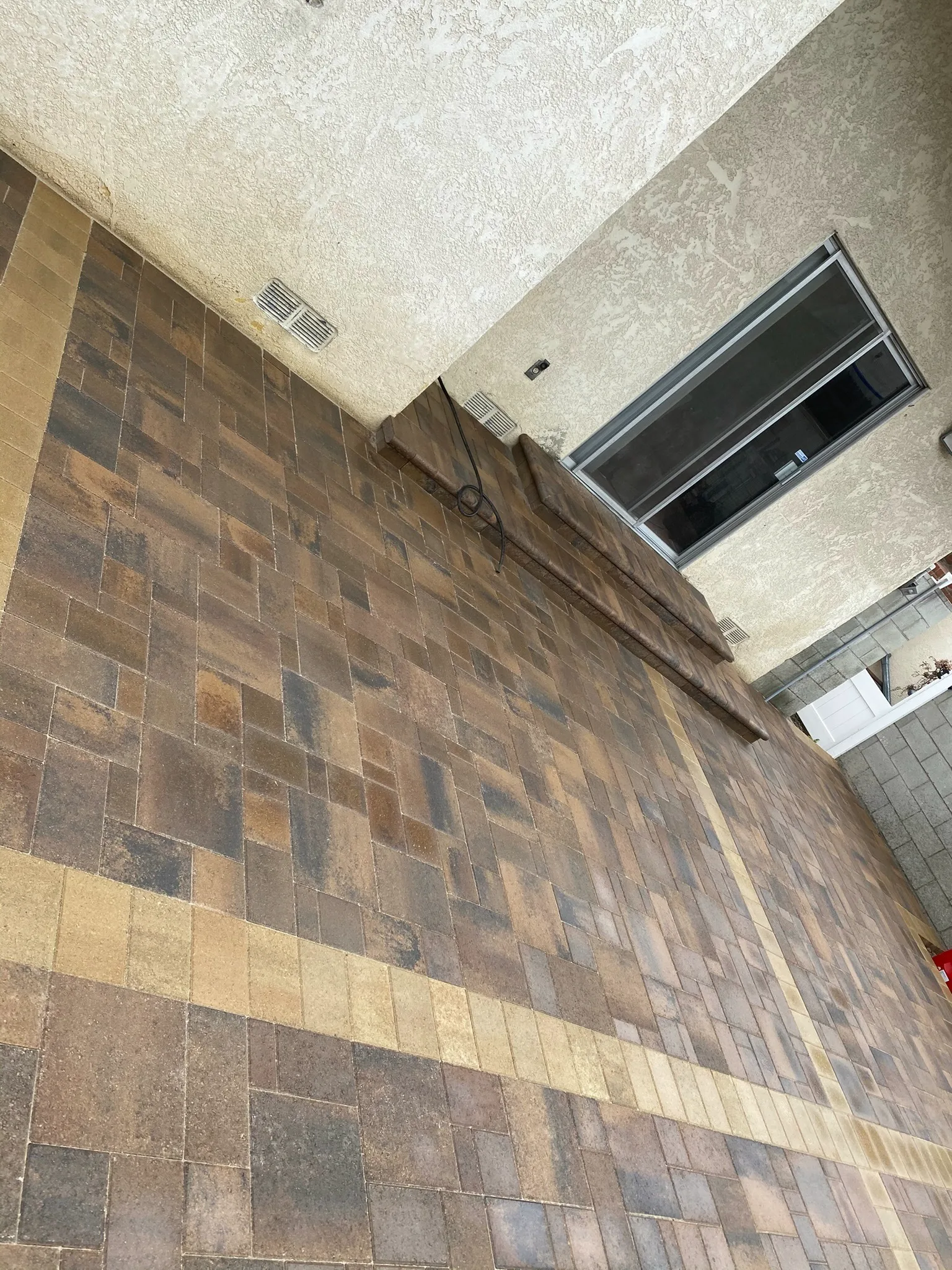
Interlocking paver driveways, patios, walkways and pool decks — real base prep, tight patterns, edges that hold.
Learn More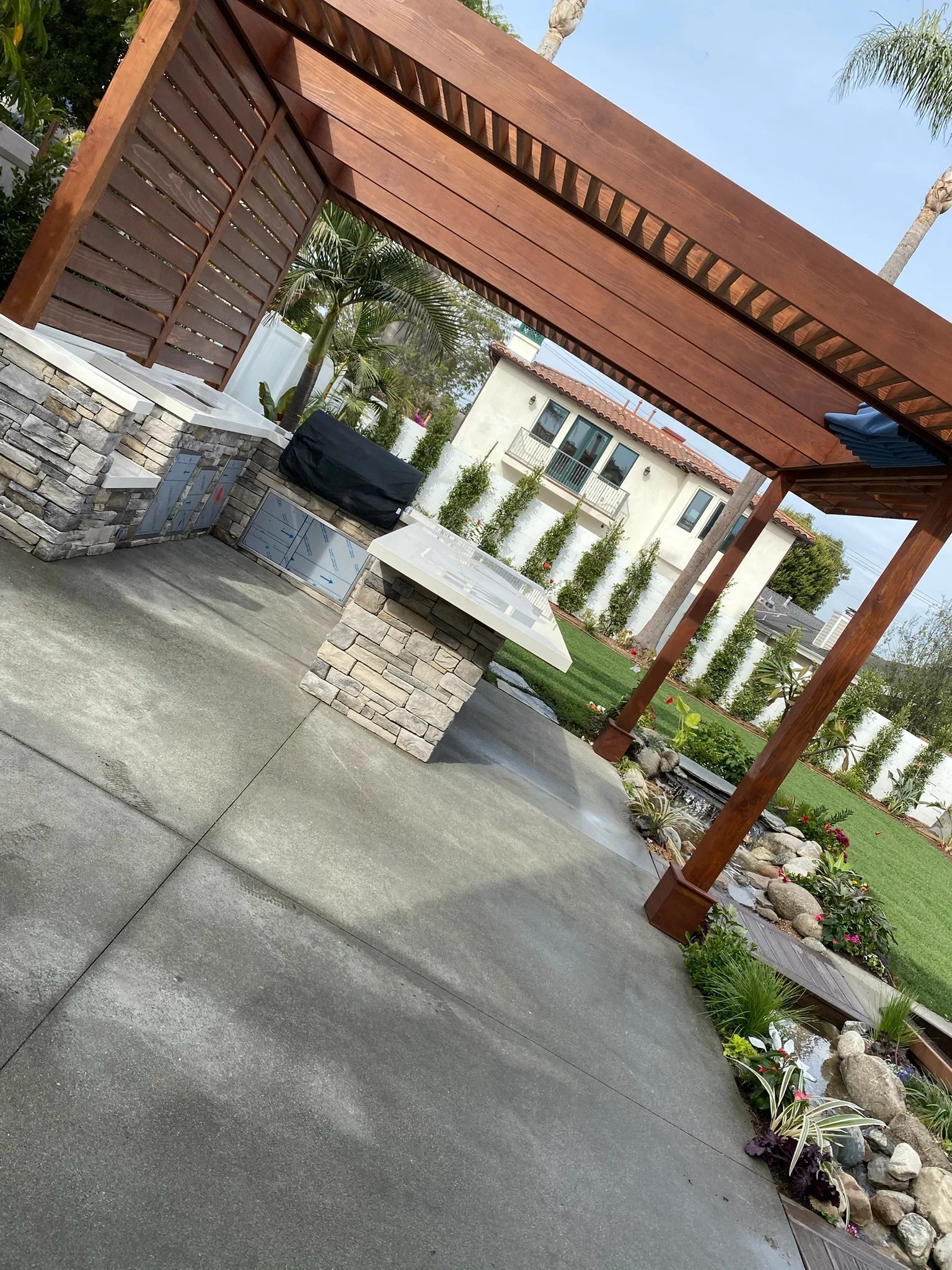
What outdoor kitchens really cost in LA in 2026: the $15K-$30K essential tier through $60K+ luxury builds, what drives the number, and where masonry fits.
Read more →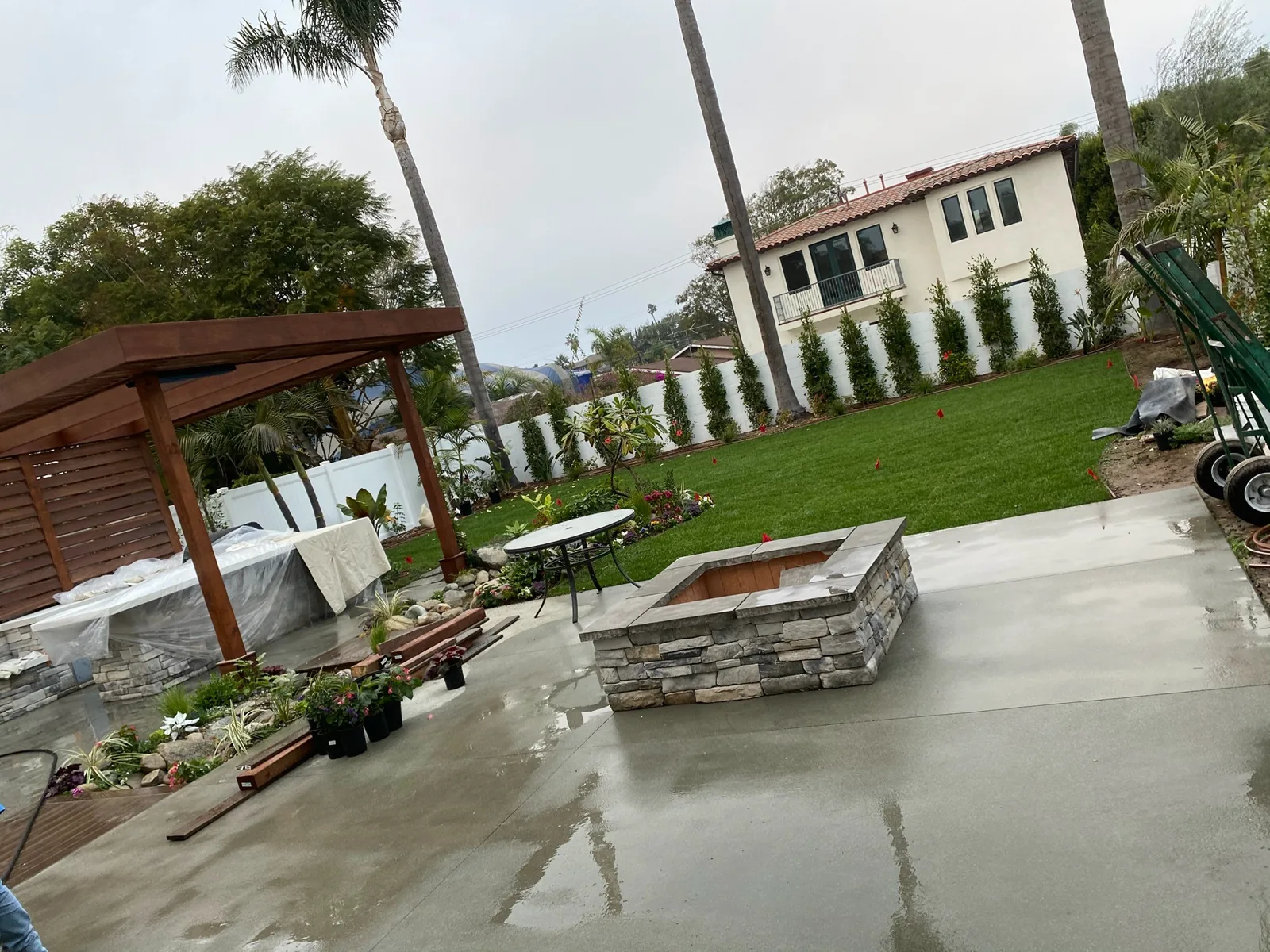
What paver patios cost in LA in 2026: the $15-$30 per square foot reality, why base prep is the whole game on LA clay, and how patios pair with outdoor rooms.
Read more →Brick, block, stone and concrete are our whole trade — not a sideline. Footings, coursing, drainage and finish details done the traditional way, because that is why masonry lasts.
Hillside walls with real drainage, slabs built for expansive soil, finishes that suit Spanish, Craftsman and modern houses. This is Los Angeles work by people who know Los Angeles lots.
We look at the site, flag permits and engineering honestly, and put the price and timeline in writing. No phone guesses, no surprise change orders for things we should have seen.
Walls, flatwork, veneer, fire features and tile from one contractor — so materials match, schedules hold, and the finished yard reads as one design instead of four handoffs.
A wall that worries you, a driveway past its best, or a backyard ready to become the good part of the house? Call or send the form and we will look at the site with you and hand you a straight written quote.
Tell us about your project — we’ll get right back to you.